Blog
China LED Street Light Manufacturers: 10 Things B2B Buyers Should Check Before Ordering

China LED Street Light Manufacturers: 10 Things B2B Buyers Should Check Before Ordering
Introduction
China has become an important sourcing destination for LED street lights, offering a wide range of products, manufacturing capabilities, customization options, and competitive pricing.
For B2B buyers, including lighting distributors, electrical contractors, municipal project suppliers, wholesalers, and procurement managers, sourcing from China can create valuable business opportunities.
However, choosing the wrong LED street light manufacturer can lead to serious problems, including inconsistent product quality, project delays, certification issues, unexpected costs, and warranty disputes.
A competitive quotation does not necessarily mean a reliable supplier.
Before placing an order, buyers should evaluate not only the product price but also the manufacturer's engineering capabilities, production management, testing procedures, supply chain, and after-sales support.
This guide explains 10 essential things to check before ordering from China LED street light manufacturers, helping B2B buyers reduce procurement risks and make more informed sourcing decisions.
1. Verify Whether You Are Working with a Real Manufacturer
One of the first steps is to understand the supplier's actual business model.
Some Chinese lighting companies operate their own factories, while others are trading companies, distributors, or sourcing agents.
Both models can be useful, depending on your procurement needs. However, understanding the supplier's capabilities is essential.
What should B2B buyers check?
Does the company operate its own manufacturing facility?
Which production processes are performed in-house?
Does it have its own engineering and quality control teams?
Can it demonstrate its production lines and testing facilities?
Does it manufacture street lights regularly or only source them from other factories?
Ask for a video for factory tour, manufacturing photos, company profile, and relevant business documentation.
For larger projects, consider conducting a factory audit or arranging an independent inspection.

2. Check the LED Street Light Design and Engineering Capability
A reliable LED street light manufacturer should understand more than assembly.
Outdoor lighting projects require careful consideration of optical performance, thermal management, mechanical construction, electrical safety, and environmental conditions.
A well-designed LED street light should balance efficiency, durability, light distribution, and maintenance requirements.
Important design features to evaluate
Housing material
Check whether the luminaire housing uses suitable materials, such as die-cast aluminum, and whether the construction is appropriate for the intended environment.
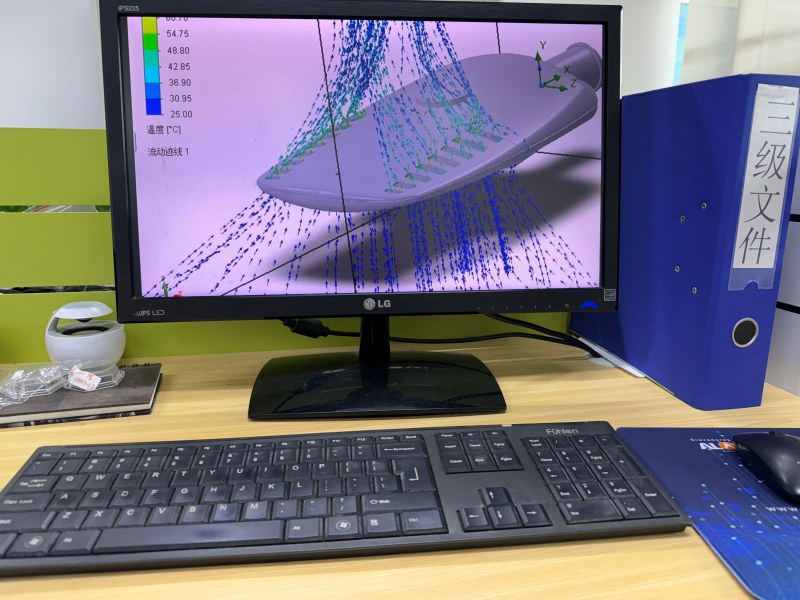
Heat dissipation
LED junction temperature significantly influences lumen maintenance and component reliability.
Ask about the thermal design, operating temperature range, and temperature test results.
Optical system
Review the lens material, optical design, beam distribution, and light distribution options.
Mechanical structure
Evaluate mounting compatibility, adjustment mechanisms, fasteners, sealing structure, and maintenance access.
Customization
For OEM or ODM projects, ask whether the manufacturer can modify housing dimensions, mounting structures, optics, power configurations, or product appearance.
Not every customization is technically or economically practical, so clarify tooling costs, development timelines, and minimum order quantities.
3. Verify Actual Lighting Performance, Not Just Advertised Lumens
Luminous efficacy, measured in lumens per watt (lm/W), is an important purchasing metric.
However, comparing LED street lights using catalog figures alone can be misleading.
Some figures refer to LED chip performance rather than the complete luminaire.
Buyers should compare finished-fixture performance under clearly identified test conditions.
What information should you request?
Rated input power
Measured luminous flux
Luminaire luminous efficacy
Correlated color temperature (CCT)
Color rendering index (CRI)
Photometric distribution
Power factor
Total harmonic distortion (THD), where specified
Relevant photometric test reports
Request an applicable photometric report, such as an IES LM-79 report where appropriate, and confirm that the report matches the quoted product configuration.
Also request the corresponding IES or LDT photometric file.
These files can support lighting calculations using software such as DIALux or other suitable lighting design tools.
Why does this matter?
A street light with higher lumens per watt does not automatically produce better road illumination.
The actual lighting result depends on road width, pole height, spacing, mounting angle, optical distribution, and project lighting requirements.
A professional manufacturer should help buyers evaluate the complete lighting solution rather than focusing only on wattage.
4. Check Certifications and Test Reports
Certification and compliance requirements vary depending on the destination market, product design, and project specifications.
A certificate for one product does not automatically cover every model in a manufacturer's catalog.
Before ordering, request documentation for the exact model and configuration.
Documents to consider
Depending on the destination market and application, relevant documents may include:
CE-related compliance documentation
Electrical safety test reports
RoHS documentation
CB certificates or reports, where applicable
UL or ETL certification for applicable North American requirements
LM-79 photometric reports
LM-80 LED package data
TM-21 lumen maintenance projections
IP and IK test reports
Not every document applies to every product or market.
For example, CE marking involves applicable legal requirements and conformity assessment; it should not be treated as a universal third-party quality certification.
For North American projects, check the applicable safety certification requirements and verify listing status and model coverage with the relevant certification organization.
For outdoor street lights, pay particular attention to:
IP rating: Protection against dust and water ingress.
IK rating: Resistance to mechanical impact.
Request the underlying test documentation when these ratings are important to your project.
Important: Always confirm that the tested product matches the supplied product, including housing, sealing components, driver, optics, and electrical configuration.
5. Evaluate LED Drivers and Electrical Protection
The LED driver is a critical component in street lighting.
Driver selection affects electrical performance, dimming compatibility, thermal behavior, maintenance, and reliability.
A manufacturer should clearly identify the driver specifications rather than simply describing it as a high-quality driver.
Questions to ask your supplier
Which driver brand and model will be used?
What is the driver's input voltage range?
What is its operating temperature range?
Is dimming available?
What surge protection level is provided?
Is the surge protection integrated or replaceable?
What are the power factor and THD values?
Are replacement drivers available?
For projects exposed to lightning or unstable power conditions, surge protection deserves special attention.
Specify the required surge immunity level based on local electrical conditions, applicable standards, and project requirements.
Also verify whether the control system supports your intended application, such as photocells, 0-10V dimming, DALI, or compatible smart lighting interfaces.
Do not assume that all control interfaces are interchangeable.
6. Inspect the Manufacturing Quality Control System
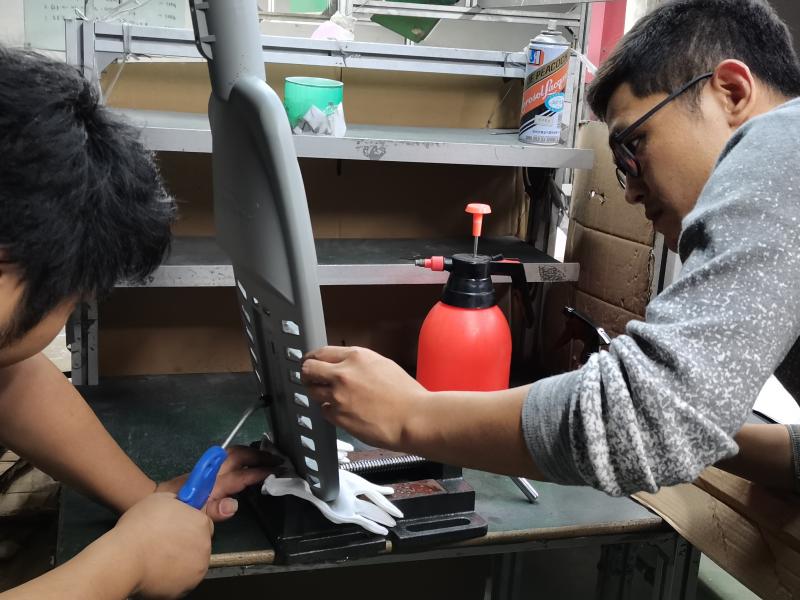
Even a well-designed LED street light can fail if production quality is inconsistent.
B2B buyers should understand how the manufacturer manages quality throughout production.
A reliable quality control process should address:
Incoming material inspection
Check components such as LED modules, drivers, aluminum housings, lenses, gaskets, connectors, and cables.
Production inspection
Verify assembly quality, wiring, fastener installation, sealing, and component consistency.
Electrical testing
Review appropriate testing procedures, which may include power consumption, insulation, grounding, and functional checks.
Final inspection
Confirm appearance, dimensions, labeling, packaging, and product operation.
Traceability
Ask whether the factory records batch numbers, production dates, component suppliers, and inspection results.
What should you request?
Quality control procedure
Sample inspection report
Production testing records
Defect handling procedure
Corrective action process
Quality management system documentation, if applicable
For large orders, consider agreeing on an inspection plan and acceptance criteria before production starts.
Avoid relying on vague statements such as "100% quality guaranteed" without supporting procedures.
7. Confirm Product Lifetime and Warranty Conditions
LED street light manufacturers often advertise long operating lifetimes.
However, lifetime claims should be interpreted carefully.
LED package lumen maintenance, complete luminaire performance, driver lifetime, and real-world service life are not identical.
For example, LM-80 data and TM-21 projections can support certain LED lumen maintenance assessments, but they do not independently guarantee the lifetime of the complete street light.
Questions to ask
Is the lifetime claim based on LED package data or complete luminaire testing?
What L70 or L90 value is specified?
Under what operating temperature and conditions?
What is the expected maintenance requirement?
What warranty period is offered?
Which components are covered?
Who pays shipping costs for replacement products?
What is the claim submission process?
Are spare drivers or modules available?
Read the warranty carefully
A five-year warranty may sound attractive, but buyers should also evaluate:
Warranty start date
Coverage exclusions
Labor and transportation responsibilities
Replacement or credit policy
Claim processing time
Spare parts availability
For distributors and contractors, clear warranty conditions are particularly important because they affect project risk and customer satisfaction.
8. Compare Total Procurement Cost, Not Just Unit Price
Price is important, especially for distributors, wholesalers, and competitive tender projects.
However, choosing the lowest quotation may create additional costs later.
A complete procurement comparison should include the total landed cost.
Consider these cost elements
| Cost Item | What to Check |
|---|---|
| Unit price | Exact product configuration and specifications |
| Tooling cost | Whether new molds or customized components are required |
| Packaging | Export packaging and project-specific labeling |
| Shipping | Sea freight, air freight, or other transport costs |
| Insurance | Cargo insurance requirements |
| Customs | Duties, taxes, and clearance charges |
| Inspection | Third-party inspection and testing expenses |
| Spare parts | Recommended replacement stock |
| Installation | Mounting compatibility and installation labor |
| Maintenance | Expected servicing and replacement costs |
For public lighting projects, energy consumption and maintenance can have a substantial impact on long-term costs.
A product with a slightly higher initial price may offer better overall value if it provides verified performance, easier maintenance, and lower operating costs.
Use consistent assumptions when comparing suppliers.
9. Verify Production Capacity, Lead Time, and Delivery Reliability
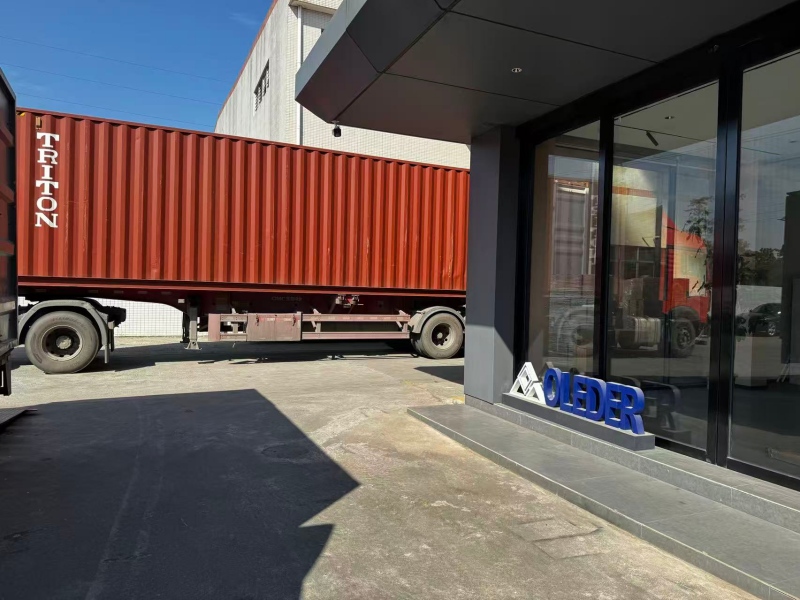
A supplier may provide an attractive quotation but struggle to deliver a large project on time.
This can become a major issue for electrical contractors and project procurement teams working with fixed installation schedules.
Before placing an order, confirm:
Monthly production capacity
Current production workload
Component availability
Production lead time
Sample approval schedule
Packaging and shipping preparation time
Shipping terms and delivery responsibilities
Production batch management
Contingency plans for material shortages
Ask the supplier to distinguish between sample lead time, mass production lead time, and transportation time.
For customized projects, confirm whether special tooling, engineering approvals, or certification work could affect the delivery schedule.
A practical procurement strategy
For large orders, consider dividing the procurement process into stages:
Technical specification confirmation
Sample production
Sample testing and approval
Mass production
Pre-shipment inspection
Shipment and delivery
The production schedule should include realistic time for inspection, corrective action, and document preparation.
10. Evaluate Communication, OEM/ODM Services, and After-Sales Support
Long-term supplier relationships can be more valuable than a one-time low-price purchase.
For B2B lighting businesses, a manufacturer with responsive communication and reliable engineering support can make future orders easier.
Evaluate the supplier's service capabilities
Technical support
Can the team assist with lighting calculations, photometric files, product selection, and technical documentation?
OEM services
Can the factory provide branding, packaging customization, labeling, or product configuration options?
ODM services
Can it support product design, prototyping, mold making, trial production, and mass production?
Project support
Can it provide documents required for tender submissions, product approvals, and project handover?
After-sales service
Does it have a clear process for warranty claims, spare parts, troubleshooting, and technical assistance?
Protect your interests contractually
For OEM and ODM projects, define the following in writing:
Product specifications
Drawings and approved samples
Tooling ownership
Intellectual property rights
Design exclusivity, if agreed
Component substitution rules
Quality acceptance criteria
Delivery milestones
Warranty obligations
Confidentiality requirements
These terms can help reduce misunderstandings and protect both parties.
Bonus: A Practical LED Street Light Supplier Evaluation Checklist
Before issuing a purchase order, use the following checklist.
| Evaluation Item | Verified? |
|---|---|
| Manufacturer identity and factory capabilities | ☐ |
| Product specifications and approved configuration | ☐ |
| Lighting performance and photometric files | ☐ |
| Required certifications and test reports | ☐ |
| Driver specifications and surge protection | ☐ |
| Quality control procedures | ☐ |
| Warranty and product lifetime documentation | ☐ |
| Total landed cost | ☐ |
| Production capacity and delivery schedule | ☐ |
| Contract, inspection, and after-sales terms | ☐ |
Buyer recommendation: For your first order, request a representative sample and approve it against a written specification. For major projects, consider independent testing and pre-shipment inspection.
Why Consider OLEDER for LED Street Lighting Projects?
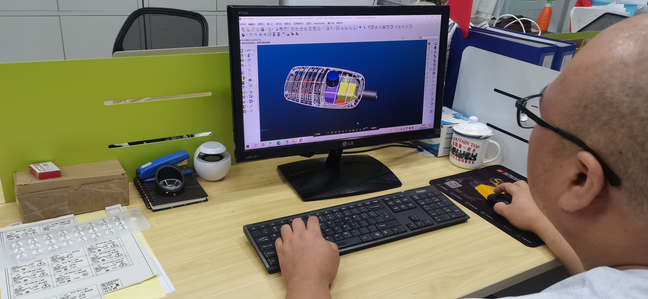
For B2B buyers sourcing outdoor lighting products from China, selecting a supplier with relevant manufacturing experience, engineering capabilities, and project support is an important part of procurement.
OLEDER provides an opportunity for buyers to explore outdoor LED lighting products and manufacturing-related services.
When evaluating OLEDER or any other manufacturer, buyers should confirm the exact product specifications, certification coverage, manufacturing arrangements, and commercial terms required for their projects.
Explore the following resources:
Outdoor LED Lighting Products: Visit the OLEDER Lighting website to explore product categories.
Factory Capabilities: Review the company's factory and manufacturing information.
Street Lighting Solutions: Request product specifications, photometric files, and technical documentation for your project.
OEM/ODM Services: Contact the company to discuss customization requirements, tooling arrangements, and production feasibility.
A well-prepared RFQ will help the supplier recommend a more suitable solution.
Conclusion
Choosing the right partner among China LED street light manufacturers requires more than comparing quotations.
B2B buyers should carefully evaluate manufacturing capabilities, engineering design, verified lighting performance, certifications, driver quality, quality control, warranty terms, total procurement costs, production capacity, and after-sales support.
For distributors, a dependable manufacturer can support consistent product quality and long-term business growth.
For electrical contractors and project procurement managers, proper supplier evaluation can reduce technical risks, avoid delivery problems, and improve project execution.
Before placing your next order, prepare a detailed RFQ, request the necessary technical documents, approve a representative sample, and establish clear quality and delivery requirements.
The best LED street light supplier is not necessarily the cheapest one. It is the supplier that can consistently meet your technical, commercial, and project requirements.
Frequently Asked Questions (FAQ)
1. How do I choose reliable China LED street light manufacturers?
Start by checking the manufacturer's actual production capabilities, engineering team, product specifications, test reports, quality control system, delivery performance, and warranty conditions.
Request a representative sample and verify that the supplied product matches the approved specifications.
For large orders, consider a factory audit or independent inspection.
2. What documents should I request before ordering LED street lights from China?
Depending on your project and destination market, request:
Product datasheets
Product drawings
IES or LDT photometric files
Relevant photometric test reports
Applicable electrical safety and EMC documentation
IP and IK test reports, where required
LED lifetime supporting documentation
Driver datasheets
Quality inspection records
Warranty documentation
Always verify the documents against the exact model and configuration.
3. What is the most important specification when buying LED street lights?
There is no single specification that determines suitability.
For road lighting projects, buyers should prioritize compliance with the applicable lighting requirements, photometric distribution, uniformity, glare control, power consumption, environmental protection, and electrical safety.
Luminaire efficacy is important, but the complete lighting design should determine product selection.
4. Is it better to buy directly from an LED street light factory in China?
Buying directly from a manufacturer may offer advantages in customization, engineering communication, and production coordination.
However, a qualified trading company or sourcing partner may also provide value through supplier management, consolidation, inspection, and logistics services.
The best option depends on your project requirements and the supplier's capabilities.
5. What should I check before placing a bulk LED street light order?
Before bulk ordering, confirm:
Approved product sample
Final technical specifications
Certification and testing documents
Bill of materials or agreed component specifications
Quality acceptance criteria
Production schedule
Payment terms
Packaging requirements
Shipping arrangements
Warranty and spare parts policy
For significant orders, establish a documented pre-shipment inspection process.
6. Can Chinese LED street light manufacturers provide OEM and ODM services?
Many manufacturers offer some level of OEM or ODM support, but service capabilities vary.
OEM services may include branding, packaging, and configuration customization.
ODM services may involve industrial design, engineering development, prototyping, mold making, trial production, and mass production.
Buyers should confirm the manufacturer's actual capabilities, tooling costs, intellectual property arrangements, development timeline, and minimum order quantities.
7. How can I reduce the risks of sourcing LED street lights from China?
Use a structured sourcing process:
Prepare a detailed RFQ.
Evaluate multiple qualified suppliers.
Verify technical documents.
Approve samples.
Define inspection standards.
Confirm contractual responsibilities.
Conduct pre-shipment inspection.
Maintain supplier performance records.
This approach can help reduce procurement uncertainty and improve long-term sourcing decisions.
Author introduction

Author
Hey Guys ,My name is Royce O'young, the sales manager of Oleder Lighting. I have been in the LED lights industry for more than 16 years,have some experience in lighting design,
track light system configuration, and bidding technology support,and architecture inner decorating lighting advice.
If you are looking for assistance from industry professionals to help guiding you in your lighting process,feel free to reach out to our talented Oleder team .
Email: r.oyoung@oleder-lighting.com | Wechat/WhatsApp: +86159 2057 0517.
Recommended Products
CATEGORIES
CONTACT US
Contact: Royce O'young
Phone: 15920570517
Tel: 0086-20-37716973
Email: r.oyoung@oleder-lighting.com
Add: Room 335,#1 Xianke 1st Rd, Honglitronic Group,Huadu ,510890, Guangzhou,P.R.C.
 Send Email
 Royce O'young
 Sales
 WhatsApp