Blog
How to Source a Lighting Fixture ODM Manufacturer in China: A Practical Guide for Tender Contractors

Introduction: Why ODM Manufacturing Matters for Lighting Tenders
For electrical contractors, engineering companies, and procurement managers, sourcing lighting fixtures for a tender project involves much more than finding a competitive product price.
A successful lighting project requires products that meet technical specifications, comply with applicable standards, fit the installation environment, and can be delivered according to the project schedule.
However, many tender projects have specific requirements that standard catalog products cannot fully satisfy. These requirements may include customized housing dimensions, special mounting structures, particular light distributions, project-specific wattages, private-label branding, or unique mechanical designs.
This is where an experienced lighting fixture ODM manufacturer in China can provide significant value.
ODM, or Original Design Manufacturing, allows a manufacturer to develop lighting products according to a customer's project requirements. Depending on the manufacturer's engineering capabilities, the process may include product design, structural engineering, prototyping, mold making, trial production, and volume manufacturing.
For tender contractors, working directly with an ODM manufacturer can create a more coordinated process from the initial concept to the final production batch.
Instead of purchasing a standard fixture and attempting to modify it later, contractors can work with the manufacturer to develop a product around the project's technical requirements from the beginning.
China remains an important sourcing destination for lighting products because its manufacturing ecosystem includes LED components, drivers, aluminum die casting, extrusion, optical components, surface finishing, and assembly services.
Nevertheless, not every lighting supplier offers the same engineering depth. Some suppliers mainly distribute existing products, while others can undertake substantial product development and tooling projects.
The key is to identify a manufacturer that can support the entire development process—not simply supply a finished lamp.
For lighting contractors preparing project bids, this guide explains how to evaluate ODM capabilities, control development risks, and select a suitable Chinese manufacturing partner.
1. Understand the Difference Between Lighting OEM and ODM
Before selecting a supplier, contractors should understand what the manufacturer will actually be responsible for.
Although OEM and ODM services can overlap, their typical responsibilities differ.
| Item | OEM Lighting Manufacturing | ODM Lighting Manufacturing |
|---|---|---|
| Product design | Mainly provided by the customer | Developed or adapted by the manufacturer |
| Technical drawings | Usually supplied by the customer | Can be developed jointly |
| Housing design | Based on customer specifications | May include original structural design |
| Prototype development | Based on supplied drawings or specifications | May include design and engineering iterations |
| Mold making | Depends on the agreement | Can be included in the development service |
| Trial production | Usually follows an established design | Used to validate the newly developed product |
| Volume production | Yes | Yes, after design and production approval |
| Intellectual property | Defined by the contract | Requires explicit contractual agreement |
| Typical application | Customized production of an existing design | New product development and customized manufacturing |
For example, a contractor bidding on a municipal street lighting project may already have a detailed lighting specification but need a manufacturer to develop a customized aluminum housing.
This project could combine ODM engineering with OEM-style production.
Another contractor may need a completely new floodlight housing, a specific mounting bracket, and a customized heat-dissipation structure. This project would require more extensive ODM involvement.
What Should Tender Contractors Look For?
Before requesting a quotation, establish whether you need:
An existing product with minor modifications.
A customized version of an existing lighting fixture.
A new housing design based on project specifications.
A completely new fixture requiring tooling and engineering development.
A product development partner capable of supporting both prototyping and mass production.
The clearer your requirements are, the easier it will be for manufacturers to assess feasibility, development costs, tooling investment, and production schedules.
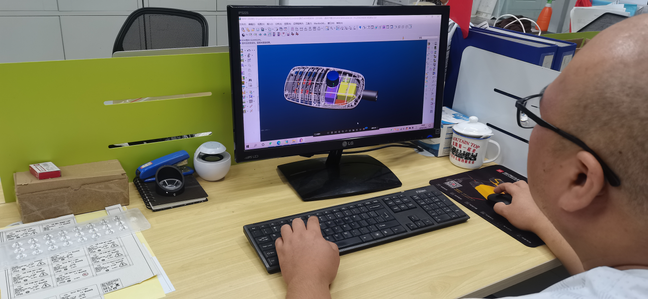
2. Step One: Evaluate the Manufacturer's Design and Engineering Capabilities
The first stage of an ODM project is product design.
For tender contractors, this stage is especially important because design mistakes can affect lighting performance, structural safety, tooling costs, installation compatibility, and project approval.
A reliable lighting ODM manufacturer should be able to translate project requirements into an engineering design that can actually be manufactured.
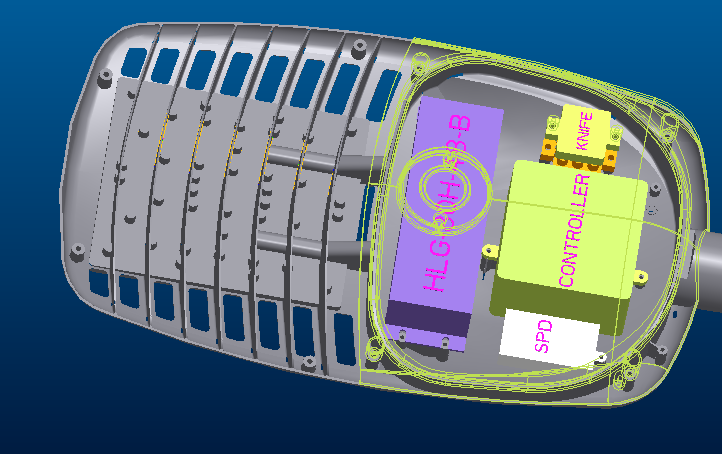
2.1 Mechanical and Structural Design
Mechanical design determines the physical structure of the lighting fixture.
Depending on the product, this may include:
Aluminum housing dimensions.
Heat-sink structure.
Mounting brackets and installation interfaces.
Internal component arrangement.
Driver compartment dimensions.
Cable entry and waterproofing structures.
Housing assembly and sealing methods.
Material selection and surface treatment.
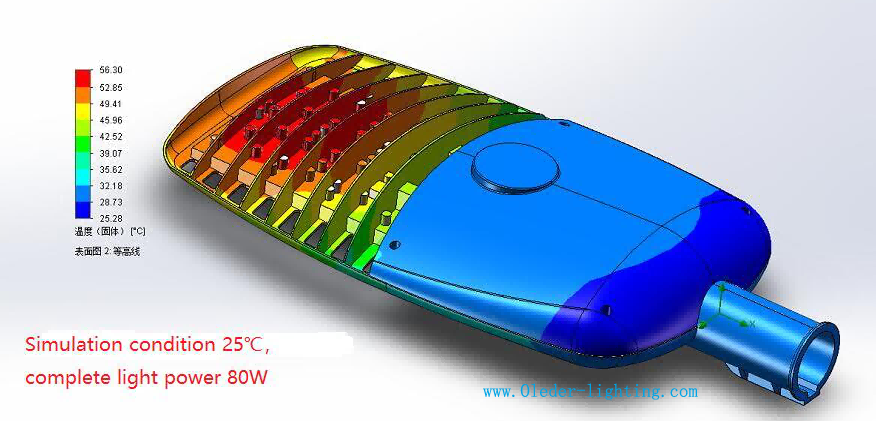
For an outdoor LED street light, the housing must accommodate the LED module, driver, optical components, and mounting structure while providing appropriate thermal management and environmental protection.
For an industrial high bay light, the design may need to account for installation height, mounting method, heat dissipation, and maintenance requirements.
For architectural lighting, appearance, dimensions, installation details, and glare control may be equally important.
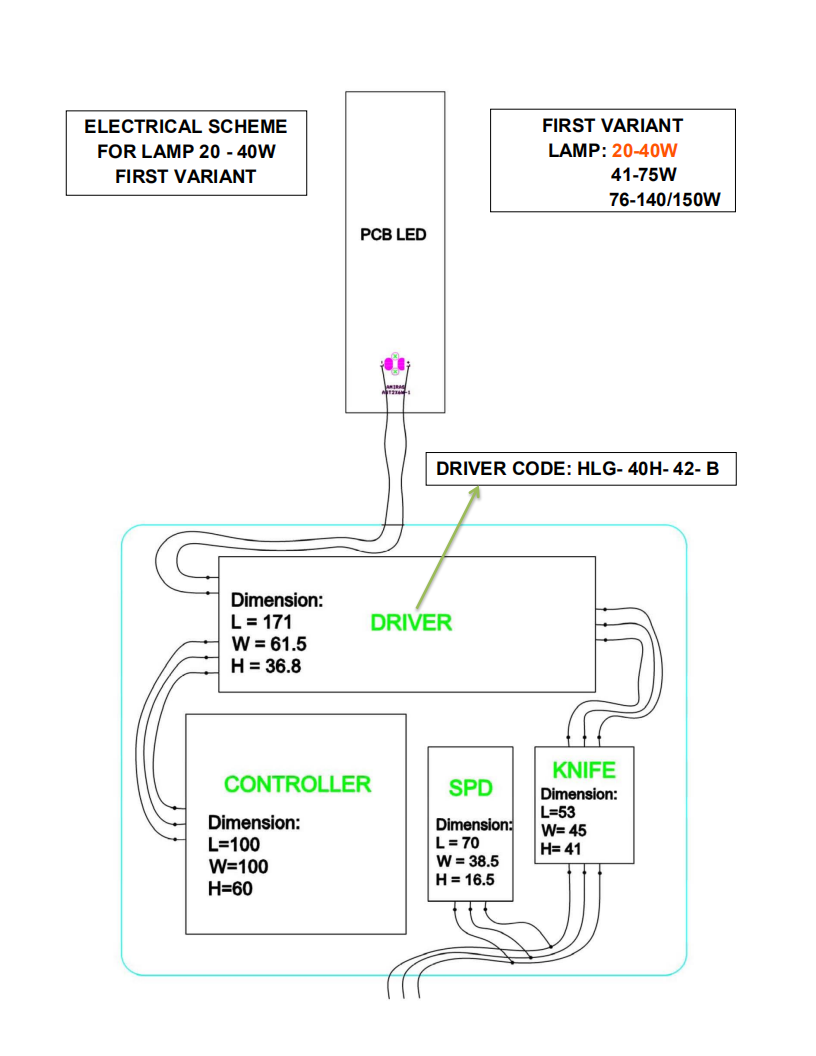
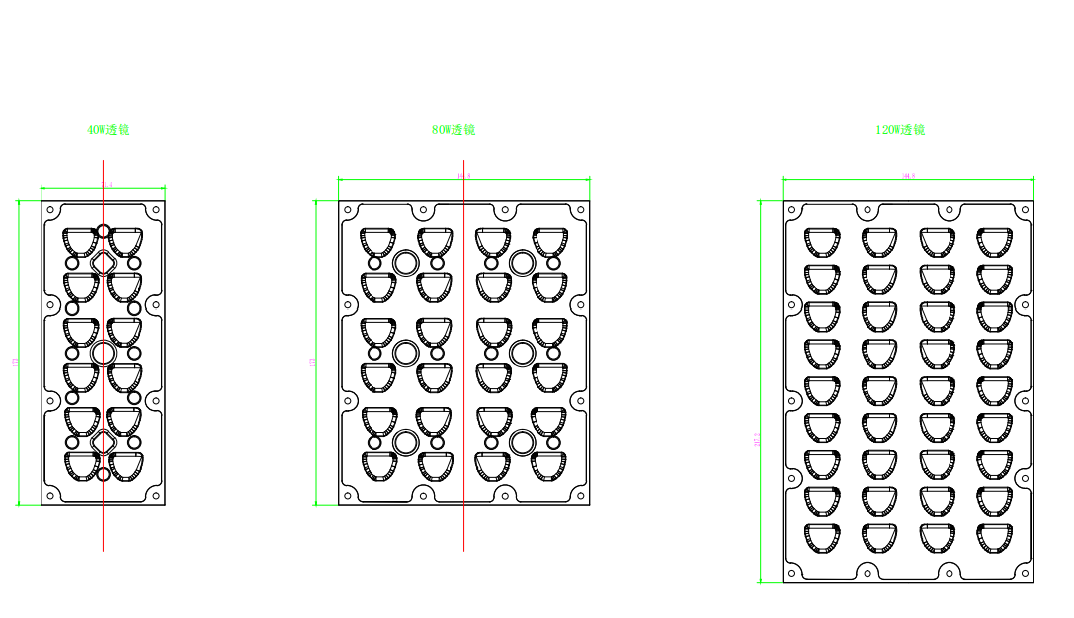
The size requirements of driver and LEDs from Tender customer
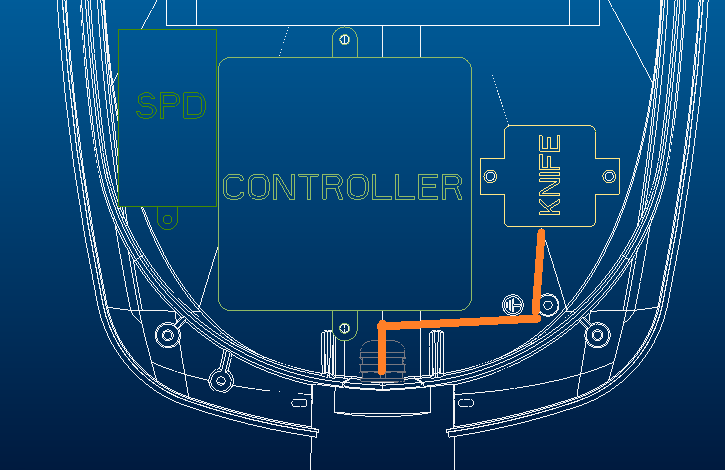
The draft dimension of driver room designed by Oleder Engineer team
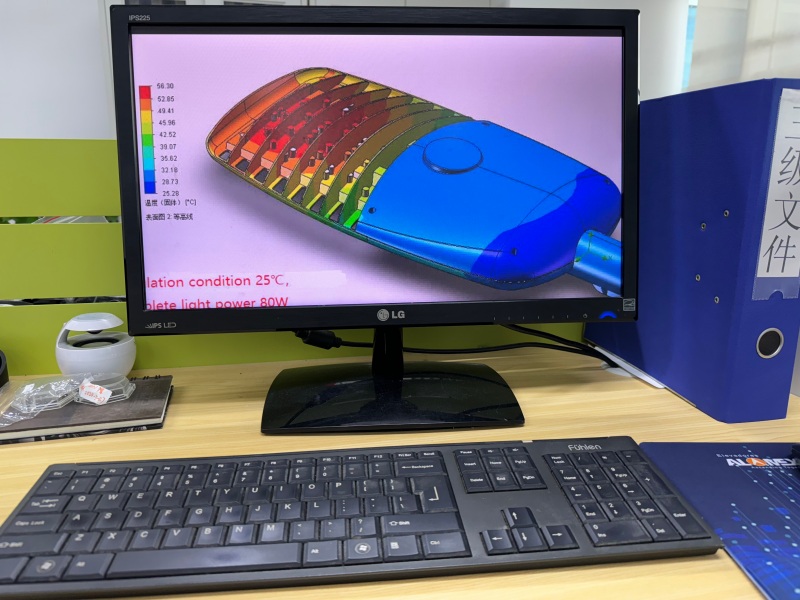
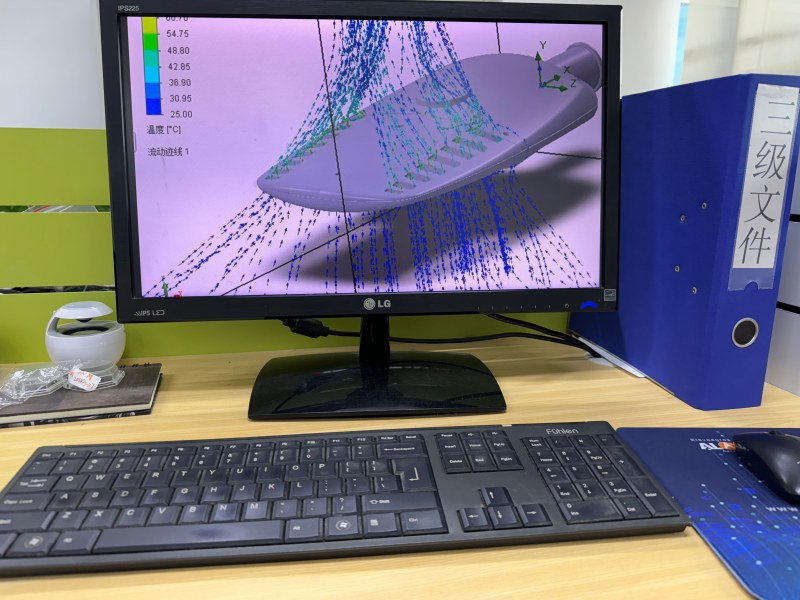
2.2 Optical and Thermal Engineering
A lighting fixture should not be evaluated on appearance alone.
Its optical performance and thermal characteristics must also meet the intended application.
Depending on the project, the manufacturer may need to evaluate:
| Engineering Area | What Contractors Should Verify |
|---|---|
| Optical design | Beam angle, light distribution, glare control |
| Light output | Lumen output and luminous efficacy |
| Color performance | CCT, CRI, and color consistency |
| Thermal design | Heat-sink structure and operating temperatures |
| Electrical design | Input voltage, power, driver compatibility |
| Mechanical design | Mounting strength and component fit |
| Environmental protection | Required IP rating and sealing design |
| Installation | Pole, bracket, ceiling, or mounting compatibility |
For public lighting tenders, request the applicable photometric documentation, such as IES or LDT files, where relevant.
These files can help lighting designers and contractors assess the fixture's suitability through lighting simulation.
Also clarify whether testing and certification are included in the ODM quotation or must be arranged separately.
2.3 Ask to Review Previous Development Projects
A manufacturer may describe itself as an ODM supplier without having sufficient experience in your product category.
Ask to review examples of previous work involving:
New product structural design.
Customized aluminum housings.
Heat-dissipation analysis.
Mold development.
Functional prototypes.
Trial production.
Volume production of customized fixtures.
These examples help establish whether the manufacturer can handle the technical demands of your project.
How OLEDER Supports Lighting Product Development
OLEDER Lighting provides lighting design, structural design, tooling, prototype development, and metal manufacturing services.
Its manufacturing capabilities include aluminum die casting and extrusion, alongside lighting assembly and testing.
For contractors developing customized outdoor or indoor lighting fixtures, these services provide a starting point for evaluating a potential ODM partner.
You can review its company capabilities on the official OLEDER Lighting About Us page.
3. Step Two: Prototype Development Before Mold Making
After the initial design is approved, the next stage is prototype development.
For tender contractors, prototypes provide an opportunity to evaluate the proposed fixture before committing to expensive production tooling.
This is particularly important when a project involves customized dimensions, a new housing, or a nonstandard installation structure.
Why Is Prototype Development Important?
A prototype can help verify whether the proposed design is practical.
Depending on the prototype method and development stage, contractors may evaluate:
Physical dimensions
Check the fixture's external dimensions, mounting holes, component positions, and installation interfaces.
Assembly feasibility
Confirm that the driver, LED module, lens, cables, brackets, and housing can be assembled as intended.
Thermal design
Evaluate the proposed heat-dissipation structure using appropriate measurements or engineering tests.
Appearance
Inspect the overall design, surface finish requirements, and suitability for the project.
Electrical and optical performance
Where the prototype includes functional lighting components, evaluate power consumption, light output, beam distribution, color characteristics, and other relevant specifications.
Installation compatibility
Confirm that the prototype can fit the specified pole, ceiling, mounting bracket, or electrical connection arrangement.
Different Types of Prototypes
Not all prototypes provide the same level of validation.
| Prototype Type | Main Purpose | Important Limitation |
|---|---|---|
3D-printed prototype PC material | Check dimensions and overall form | May not represent final material or thermal performance |
| Machined metal prototype ADC12 material | Verify selected mechanical features | May not reproduce the final die-cast surface or production economics |
| Functional prototype | Evaluate selected electrical and optical functions | May use nonproduction components or manufacturing methods |
| Die-cast trial sample | Validate tooling and production-related features | Requires tooling investment and a longer development process |
The appropriate method depends on the project's complexity and budget.
For example, a simple mounting bracket modification may require only a limited prototype.
A new high-power LED floodlight housing may need more extensive mechanical and thermal validation before production tooling is finalized.
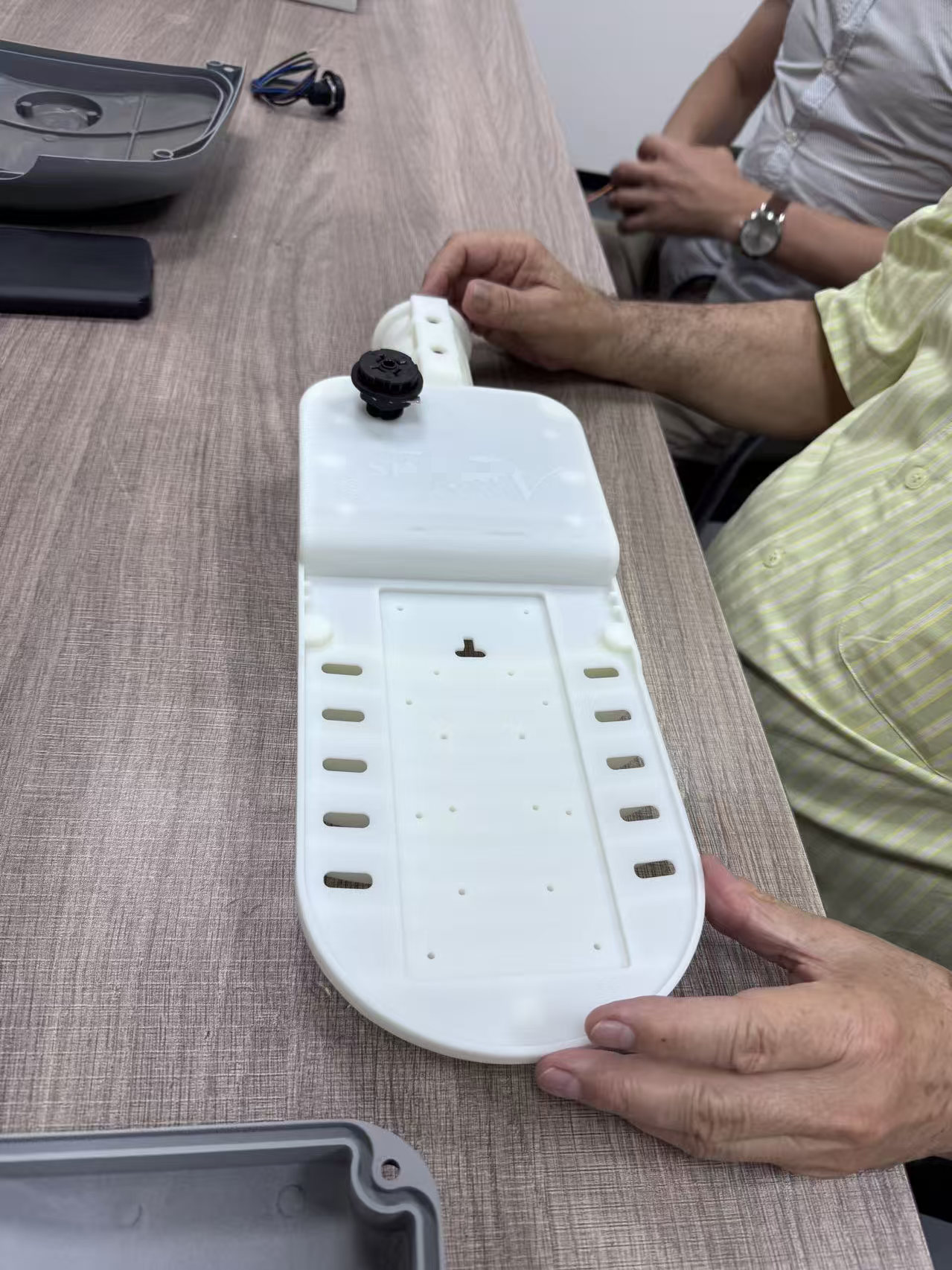
PC 3D printing Prototype sample
Practical Tip for Tender Contractors
Do not approve a prototype based only on photographs if physical fit, optical performance, or electrical characteristics are important to the tender.
Whenever practical, request a physical sample and agree on measurable acceptance criteria before proceeding.
Keep an approved prototype or an agreed reference sample for comparison during trial production and future quality inspections.
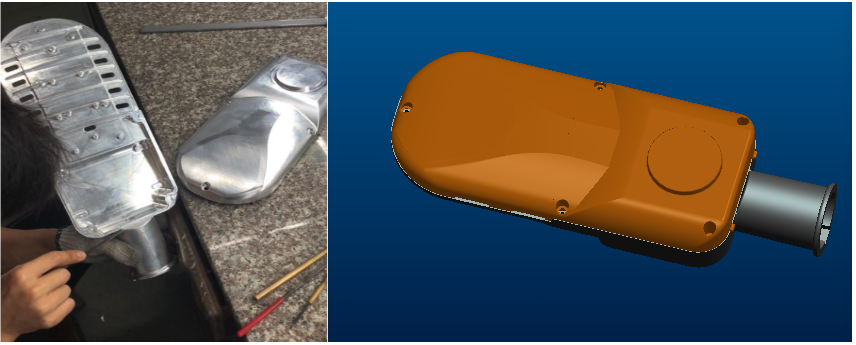
Prototyping sample CNC using ADC12 material can achive most similar heat release effect as volume production
4. Step Three: Mold Making and Tooling Investment
Mold making is one of the most important stages when developing a custom lighting fixture for volume production.
For aluminum lighting housings, die-casting molds help shape molten metal into the required housing geometry.
The mold design affects dimensional consistency, manufacturing efficiency, surface quality, and the feasibility of producing the housing at the required volume.
However, tooling is also a major commercial consideration.
A low unit price may look attractive, but the overall project economics can change significantly once tooling and engineering expenses are included.
What Should Be Included in a Mold-Making Quotation?
When requesting a tooling quotation, ask the manufacturer to clarify the following items.
| Item | Questions to Ask |
|---|---|
| Mold design | Is engineering and mold-flow analysis required or included? |
| Mold structure | What tooling configuration is proposed? |
| Material | What mold material and expected service conditions are specified? |
| Tooling cost | Is the quotation for one mold or multiple tooling components? |
| Development time | What is the estimated mold manufacturing schedule? |
| Trial samples | How many initial samples or trial rounds are included? |
| Modifications | How are design changes and mold corrections charged? |
| Ownership | Who owns the mold after payment? |
| Storage | Where will the mold be stored and maintained? |
| Transfer | Can the customer transfer the tooling to another factory? |
These questions should be settled before the purchase order is issued.
Mold Ownership and Intellectual Property
For distributors, brand owners, and tender contractors developing customized products, tooling ownership deserves special attention.
The agreement should distinguish between:
The customer's original design and intellectual property.
The manufacturer's pre-existing designs, processes, and know-how.
The newly developed product design.
The physical mold and associated tooling.
The rights to manufacture, modify, store, and transfer the tooling.
Paying for a mold does not automatically settle every intellectual-property or manufacturing-rights issue.
The contract should explicitly establish the relevant ownership and usage rights.
If the project requires exclusive production, specify the scope, territory, duration, and any exceptions in writing.
How to Control Tooling Costs
Before investing in a new mold, ask whether an existing housing or tooling platform can be adapted.
For example, the manufacturer might be able to modify a mounting bracket or adjust selected housing features without creating an entirely new mold.
However, existing tooling should only be used when the resulting design meets the project's technical and performance requirements.
For a tender project, the objective is not simply to minimize mold costs. It is to balance initial investment, product performance, manufacturing feasibility, and expected production volume.
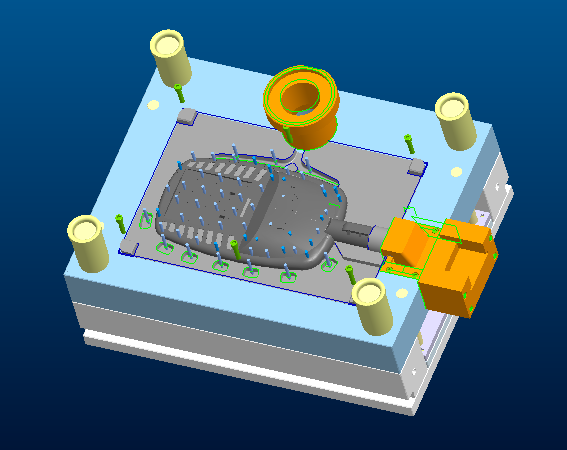
Drawing of Mold
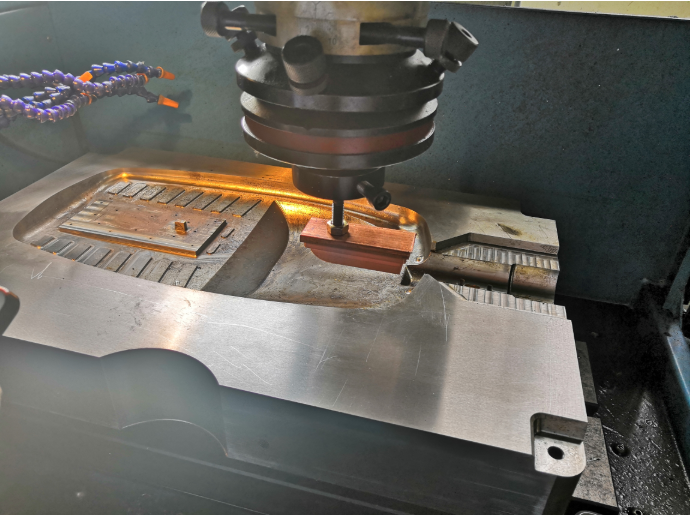
Back Mold
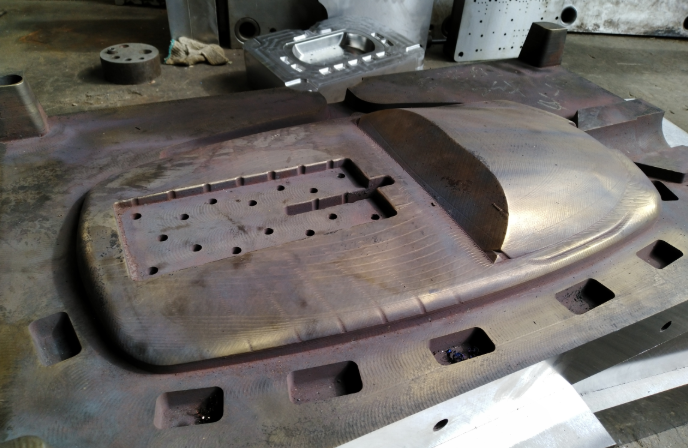
Front Mold
5. Step Four: Trial Production and Quality Validation
After the mold is completed, the manufacturer can proceed with trial production.
This stage determines whether the design, tooling, manufacturing process, and assembly methods can produce acceptable lighting fixtures consistently.
For tender contractors, trial production is a critical checkpoint before approving volume manufacturing.
A design that looks correct in CAD may still encounter practical problems during casting, machining, surface treatment, or assembly.
What Happens During Trial Production?
For a custom aluminum lighting fixture, the process may include:
1. Initial die casting
The manufacturer produces trial housings using the newly developed tooling.
2. Dimensional inspection
Critical dimensions, mounting holes, wall thicknesses where specified, and component interfaces are checked against the approved drawings.
3. Surface and structural inspection
The housing is inspected for relevant casting defects, surface issues, and other nonconformities.
4. Machining and finishing
Where required, the housing undergoes machining, deburring, powder coating, or other finishing processes.
5. Component assembly
LED modules, drivers, optics, seals, connectors, and mounting components are installed.
6. Functional testing
The assembled fixture is checked against the agreed electrical, optical, mechanical, and environmental requirements.
7. Corrective action
Any defects or deviations are documented and addressed before the next production stage.
Not every project requires the same tests. The test plan should be based on the product type, tender specification, applicable standards, and intended operating environment.
Essential Quality Checks for Lighting Fixtures
| Inspection Area | Example Checks |
|---|---|
| Housing | Dimensions, surface defects, mounting interfaces |
| Electrical | Input voltage, power consumption, driver function |
| Optical | Lumen output, CCT, CRI, light distribution |
| Thermal | Operating temperatures and heat-dissipation performance |
| Mechanical | Bracket fit, fasteners, assembly strength |
| Environmental | Required ingress protection and relevant environmental tests |
| Documentation | Drawings, specifications, test records, approved changes |
For outdoor lighting projects, the contractor may also need to verify surge protection, corrosion resistance, vibration resistance, or other requirements specified in the tender documents.
Do not assume that a test performed on one product automatically validates every product in a family.
Similarly, certifications and test reports must be checked against the exact product model and configuration being supplied.
Establish a Written Approval Process
Before volume production, create a formal approval procedure.
It should identify:
The approved product drawings.
The agreed bill of materials.
The accepted prototype or trial sample.
Required test reports.
Critical dimensions and tolerances.
Appearance and packaging requirements.
Permitted component substitutions.
The process for approving design changes.
This documentation helps prevent disputes when the first production batch differs from the sample approved by the project team.
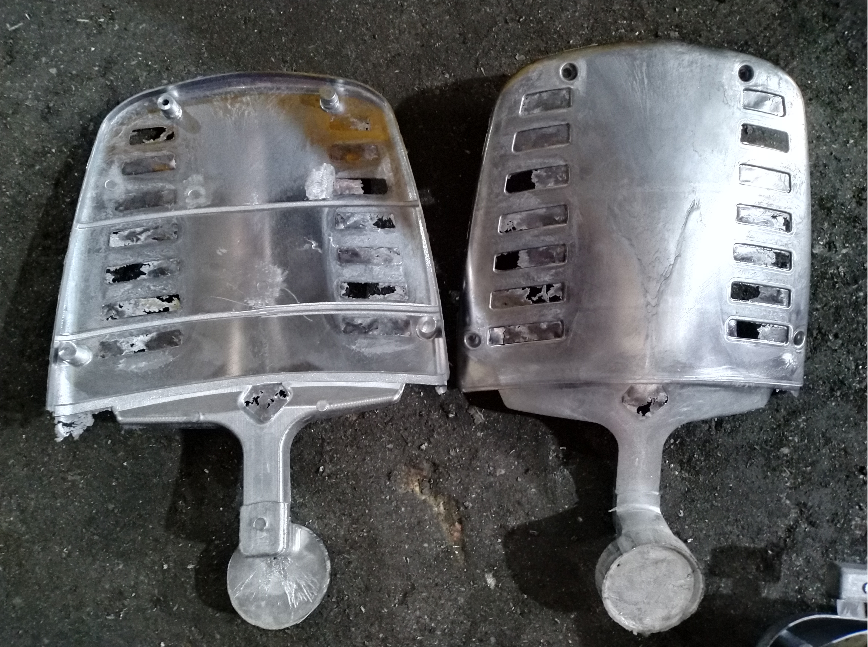
Trial Poduction for heat sink cover
6. Step Five: Volume Die Casting Production and Mass Manufacturing
Once the tooling and trial samples have been approved, the project can move to volume production.
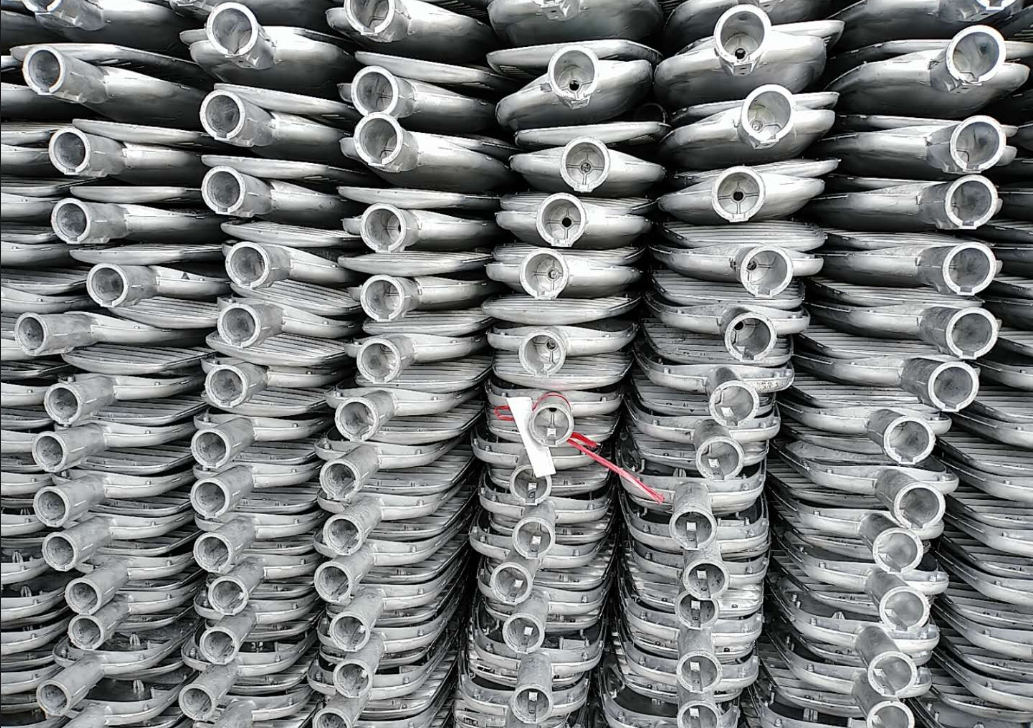
For custom aluminum lighting fixtures, volume die casting can help produce consistent housings when the tooling, process parameters, material requirements, and inspection procedures are properly controlled.
However, successful mass manufacturing involves more than operating a die-casting machine.
The manufacturer must coordinate raw materials, casting, finishing, component procurement, assembly, testing, packaging, and shipment.
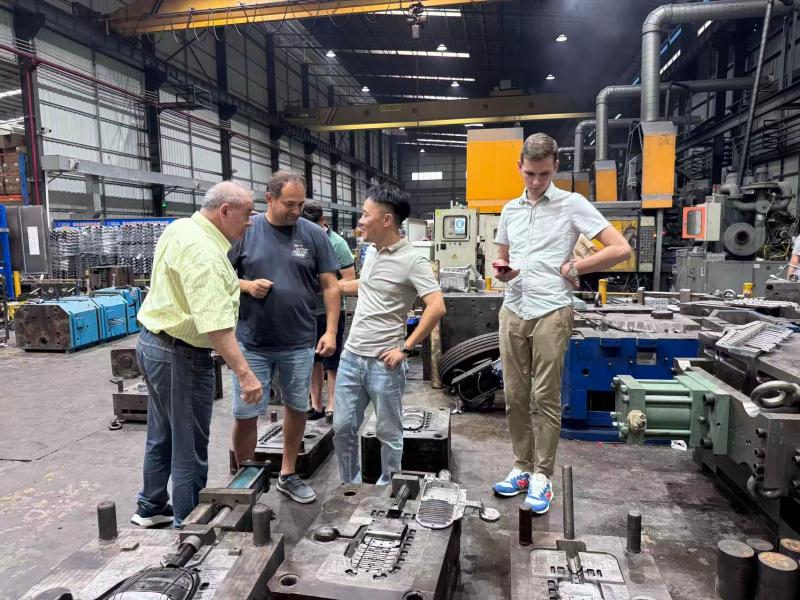
Why In-House Die Casting Can Be Valuable
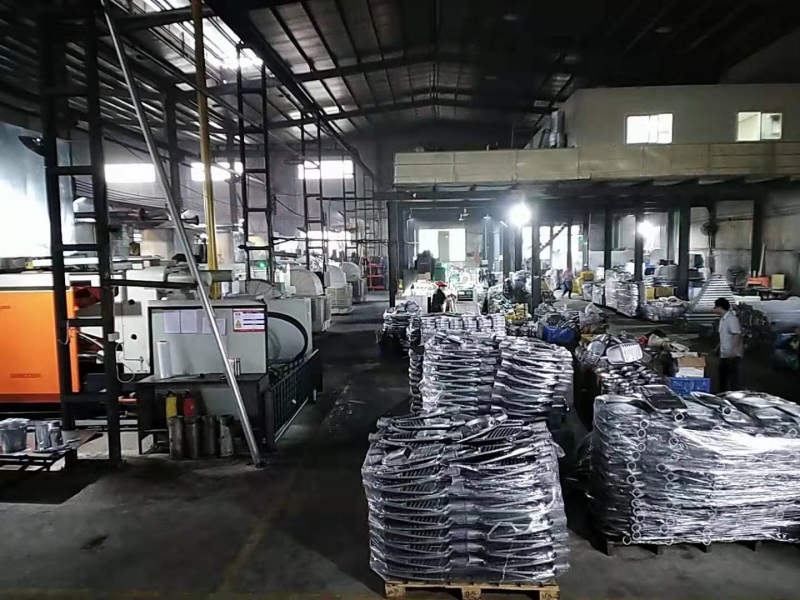
When evaluating a lighting ODM manufacturer, ask whether aluminum die casting is performed in-house or outsourced to a third party.
Neither arrangement is automatically unsuitable. What matters is whether the supplier can control quality, production schedules, costs, and technical changes.
In-house die casting may offer several advantages:
Better coordination between design and manufacturing
Engineers and production teams can work together to address tooling and casting issues.
Greater visibility into production schedules
The manufacturer may have more direct control over tooling availability and casting capacity.
Faster communication about technical problems
Manufacturing issues can be discussed with the responsible production team rather than passed through multiple companies.
Potential cost advantages at suitable volumes
When tooling and production processes are optimized, the manufacturer may be able to improve production efficiency and control unit costs.
These benefits depend on the manufacturer's actual capacity, process control, and production planning. They should not be assumed solely from a supplier's marketing claims.
What Should Contractors Verify?
For a large lighting tender, ask the manufacturer to provide information about:
Die-casting machine capacity and suitability for the housing.
Available tooling and production capacity.
Casting and finishing arrangements.
Production lead times.
Component supply arrangements.
Inspection and traceability procedures.
Planned production quantities.
Contingency plans for equipment or material delays.
For a project with multiple fixture types, also confirm whether each housing requires separate tooling and whether different products can be manufactured within the required schedule.
Calculate the Total Project Cost
The lowest quoted fixture price does not necessarily represent the lowest overall project cost.
Use a total-cost approach that considers the following:
| Cost Category | What to Include |
|---|---|
| Product development | Engineering and design fees |
| Prototyping | Prototype fabrication and testing |
| Tooling | Mold design, manufacture, and modification |
| Unit manufacturing | Casting, finishing, components, and assembly |
| Quality assurance | Inspection, testing, and applicable certification |
| Logistics | Packaging, freight, insurance, and customs costs |
| Project support | Documentation, spare parts, and agreed after-sales services |
For example, a supplier with a lower tooling quotation may not be the best choice if its design requires extensive revisions or its production schedule cannot support the tender deadline.
Likewise, a higher initial investment may be justified when the design can be manufactured efficiently at the expected order volume.
Confirm Production Capacity Before Awarding the Contract
Tender projects often operate under strict delivery schedules.
Before placing an order, obtain a production plan covering:
Tooling completion.
Trial sample approval.
Material procurement.
Start of volume production.
In-process inspection.
Final testing.
Packing and shipment.
Ask the supplier to identify critical milestones and explain which activities could affect the delivery date.
A realistic production plan is more valuable than an optimistic delivery promise that excludes tooling modifications, testing, or material procurement.
7. How to Select a Reliable Lighting Fixture ODM Manufacturer in China
Finding a suitable manufacturer requires a structured supplier evaluation.
For tender contractors, the supplier must demonstrate not only product quality but also engineering capability, production capacity, documentation, and commercial reliability.
Use the following checklist to compare potential suppliers.
7.1 Verify Manufacturing Capability
Determine whether the company manufactures the relevant products or primarily acts as a trading company.
If production is outsourced, identify which processes are handled externally and how the supplier controls quality and delivery.
Ask for factory photographs, production videos, or an audit when appropriate.
7.2 Review Engineering Resources
Ask whether the manufacturer has engineers capable of supporting:
Mechanical and structural design.
Thermal management.
Optical design or simulation.
Prototype development.
Mold design coordination.
Product testing.
Manufacturing process optimization.
The required capabilities will depend on the complexity of the lighting fixture.
7.3 Evaluate Tooling Management
For customized products, verify how tooling is designed, manufactured, maintained, stored, and modified.
Confirm the ownership and transfer terms in the contract.
7.4 Check Quality-Control Procedures
Ask for the manufacturer's inspection plan and sample test records.
Confirm that the proposed procedures cover the product's critical technical requirements and the applicable tender specifications.
7.5 Verify Certifications and Compliance
Identify the standards and approvals required in the destination market.
Check the validity, scope, and exact model coverage of any certificates or test reports supplied by the manufacturer.
If a third-party laboratory is needed, clarify who is responsible for arranging and paying for testing.
7.6 Compare the Full Commercial Offer
Do not compare suppliers using unit price alone.
Review:
Development fees.
Mold costs.
Prototype costs.
Minimum order quantities.
Production lead times.
Payment terms.
Packaging.
Shipping arrangements.
Warranty conditions.
Spare-parts availability.
Intellectual-property provisions.
7.7 Assess Communication and Project Management
A reliable ODM partner should be able to explain technical issues clearly, respond to engineering questions, and provide progress updates.
For tender projects, designate a responsible contact for technical coordination and establish a process for managing design changes.
7.8 Confirm the Manufacturer's Experience with Similar Products
A supplier with extensive experience in standard indoor lighting may not automatically be the best choice for a customized high-power outdoor fixture.
Review comparable projects and determine whether the manufacturer has experience with the materials, tooling, product category, and manufacturing methods your project requires.
8. Recommended ODM Partner: OLEDER Lighting
For contractors and procurement teams looking for a Chinese lighting fixture ODM manufacturer, OLEDER Lighting is one potential supplier to evaluate.
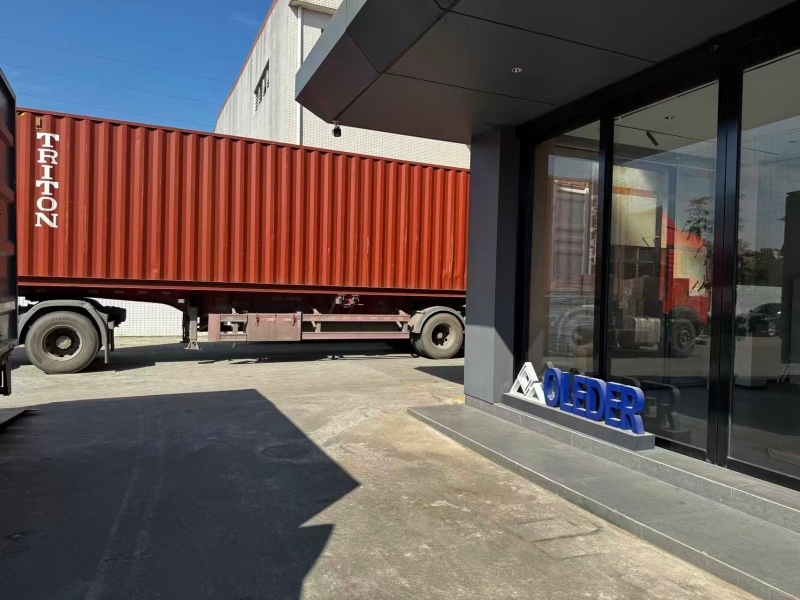
According to its published company information, OLEDER Lighting is based in Guangzhou, China, with manufacturing activities that include aluminum die casting and extrusion in Foshan.
Its stated business scope includes lighting design, structural design, tooling, prototype development, metal manufacturing, and finished LED lighting products.
The company's product portfolio includes several lighting categories:
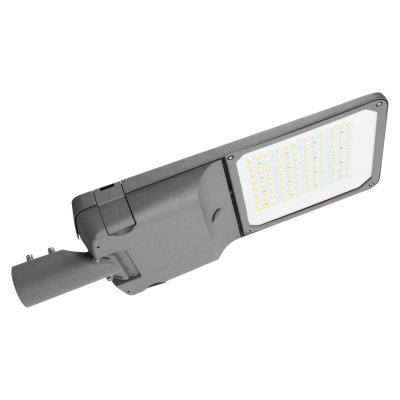
LED street lights.
LED flood lights.
LED high bay lights.
LED garden and solar lighting.
Magnetic track lighting.
Other indoor lighting and smart lighting products.
For tender contractors, this range may be relevant when a project requires customized lighting fixtures or coordinated sourcing across several product categories.
ODM Services to Discuss with OLEDER
Before starting a project, contractors should confirm the availability, scope, cost, and lead time of each required service.
| ODM Stage | Project Discussion Points |
|---|---|
| Design | Product concept, drawings, housing dimensions, technical specifications |
| Prototyping | Prototype method, sample quantity, validation requirements |
| Mold making | Tooling design, mold cost, ownership, maintenance |
| Trial production | Sample quantity, inspection criteria, corrective actions |
| Volume production | Casting capacity, component supply, quality control, delivery schedule |
For a new product development project, provide a clear technical brief before requesting a quotation.
The brief should include the application, product specifications, installation method, estimated quantity, target market, applicable standards, and expected delivery schedule.
This allows the manufacturer to assess whether the project can use an existing product platform or requires a new design and mold.
Learn More About OLEDER Lighting
For more information, explore these pages on the official company website:
These pages provide a starting point for reviewing the company's stated capabilities, products, and contact information. Contractors should request project-specific technical documentation and confirm manufacturing arrangements before making a supplier decision.
Conclusion: Choose an ODM Manufacturer That Can Support the Entire Lighting Project
Sourcing a reliable lighting fixture ODM manufacturer in China requires more than comparing quotations or selecting a factory with a large product catalog.
For tender contractors, the right manufacturing partner should be able to translate project requirements into a manufacturable design, develop prototypes, coordinate mold making, validate trial production, and maintain consistent quality during volume manufacturing.
Each stage affects the next.
A well-engineered design can simplify tooling. Proper prototype validation can reduce production risks. Effective trial production can identify problems before mass manufacturing. Finally, controlled volume die casting and assembly can help the manufacturer deliver consistent products according to the agreed specifications.
Before committing to an ODM project, verify the supplier's capabilities, agree on tooling ownership, establish clear acceptance criteria, and confirm the full production schedule.
For projects involving customized aluminum lighting housings, a manufacturer with coordinated engineering, tooling, die-casting, and assembly capabilities may offer important practical advantages. The value of that arrangement should be assessed against the project's technical requirements, production quantity, schedule, and total cost.
OLEDER Lighting is one manufacturer that tender contractors can consider when evaluating Chinese suppliers for customized LED lighting development and production. Review its capabilities, request a project-specific quotation, and confirm the technical and commercial details before making a final decision.
The goal is not simply to find a lighting factory in China. It is to establish a manufacturing partnership that can turn your project specifications into reliable, production-ready lighting fixtures.
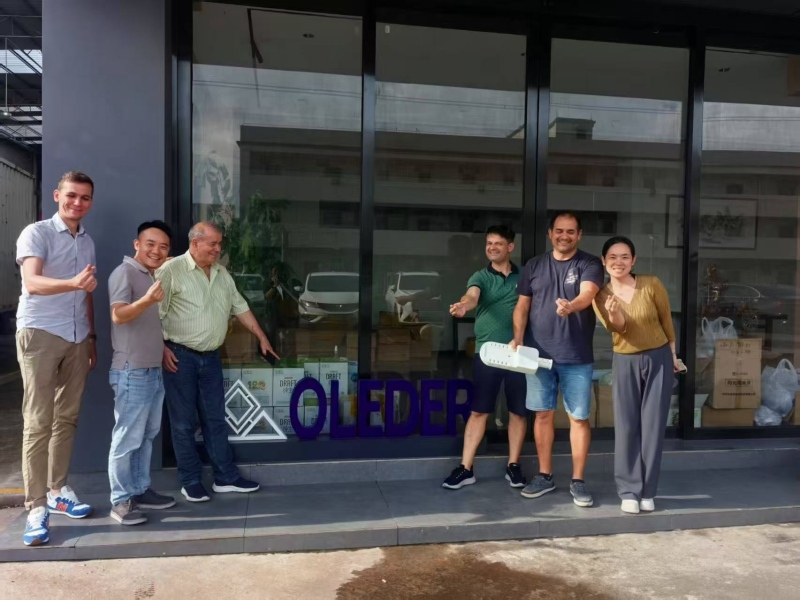
Author introduction

Author
Hey Guys ,My name is Royce O'young, the sales manager of Oleder Lighting. I have been in the LED lights industry for more than 16 years,have some experience in lighting design,
track light system configuration, and bidding technology support,and architecture inner decorating lighting advice.
If you are looking for assistance from industry professionals to help guiding you in your lighting process,feel free to reach out to our talented Oleder team .
Email: r.oyoung@oleder-lighting.com | Wechat/WhatsApp: +86159 2057 0517.
Recommended Products
CATEGORIES
CONTACT US
Contact: Royce O'young
Phone: 15920570517
Tel: 0086-20-37716973
Email: r.oyoung@oleder-lighting.com
Add: Room 335,#1 Xianke 1st Rd, Honglitronic Group,Huadu ,510890, Guangzhou,P.R.C.
 Send Email
 Royce O'young
 Sales
 WhatsApp