Blog
How to Choose the Right Magnetic Track Lighting Manufacturer: A Complete Sourcing Guide 2026

The magnetic track lighting market is experiencing significant growth, driven by demand in retail, hospitality, and commercial interiors for flexible, modern lighting solutions. As we move through 2026, sourcing the right manufacturing partner has become more critical than ever. This guide provides a comprehensive framework for evaluating and selecting a magnetic track lighting supplier that aligns with your quality standards, budget, and project requirements.
Why Source Magnetic Track Lighting from China?
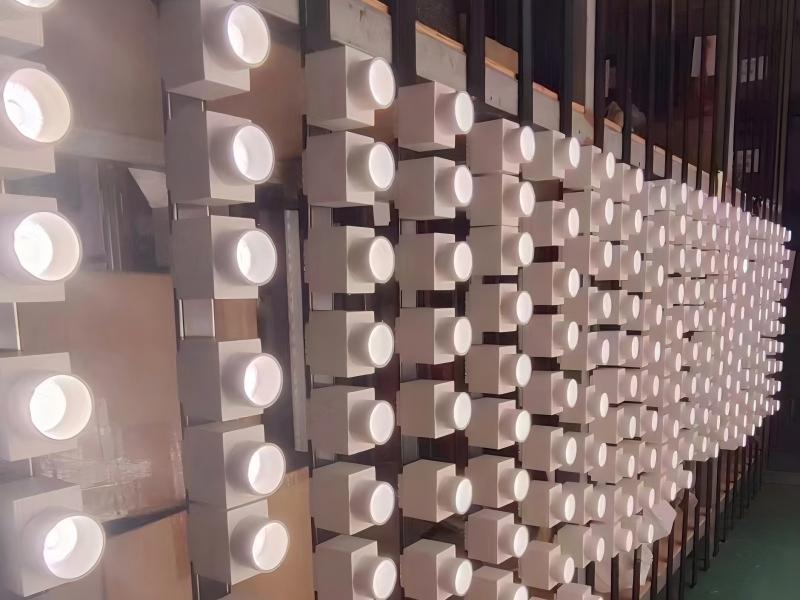
China remains the world's leading producer of LED lighting products, with Guangdong Province—particularly cities like Foshan, Zhongshan, Dongguan, and Shenzhen—serving as the undisputed epicenter of innovation and manufacturing excellence . These regions benefit from vertically integrated supply chains, from aluminum extrusion and PCB fabrication to final assembly, enabling rapid prototyping, cost-efficient production, and fast time-to-market. Foshan and Zhongshan alone account for over 70% of China's total lighting exports .
The concentration of manufacturers in these hubs provides buyers with access to a deep pool of experienced exporters, standardized quality control processes, and robust infrastructure that supports everything from small pilot orders to large-scale OEM/ODM projects .
Understanding the Technology: What Makes Magnetic Track Lighting Different?
Before evaluating suppliers, it's essential to understand what you're buying. Magnetic track lighting systems use strong magnets built into the fixture housing to connect securely to specially designed metal tracks containing copper conductors . This design offers several advantages over traditional track lighting:
- Tool-free installation and repositioning: Fixtures snap onto the track magnetically, enabling easy maintenance and flexible lighting arrangements
- Low-voltage safety: Most systems operate at 48V DC, eliminating contact risk
- System flexibility: Tracks can be field-cut to length, and the number of lamps can be freely increased or decreased
The main drawback is cost—magnetic systems typically carry a 15–30% premium over traditional track lighting—though labor savings during installation often offset the higher upfront price .
Essential Criteria for Evaluating Suppliers
Choosing the right supplier goes beyond price comparisons. Here are the critical factors every procurement professional should evaluate:
1. Certifications and Compliance Standards
Ensure your supplier holds internationally recognized certifications relevant to your target market :
| Market | Required Certifications |
| Europe | CE, RoHS, REACH |
| North America | UL, ETL |
| International | ISO 9001 (quality management) |
For European buyers, CE marking is mandatory and must be supported by documented compliance with standards like EN IEC 55015 for EMC and EN 61547 for immunity . Suppliers lacking these credentials may pose legal, safety, or customs clearance risks.
2. Technical Specifications and Component Quality
A reliable supplier should be transparent about their components and specifications :
- **LED chips**: Brand-name chips from Samsung, Honglitronics, Osram, or Philips indicate higher quality and better lumen maintenance
- **CRI (Color Rendering Index)**: For commercial applications, look for CRI ≥ 90
- **Driver quality**: Premium suppliers use drivers from SC power (UL list driver )or similar brands with over-voltage and over-heat protection
- **Track material**: High-quality tracks use 6063 aluminum alloy with minimum 1.2mm thickness for load-bearing capacity
3. Production Capacity and Operational Scale
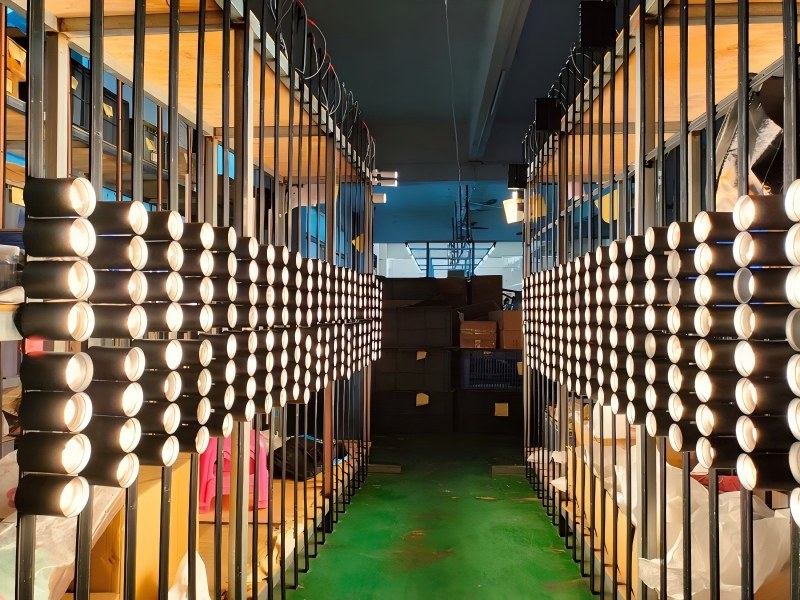
Assess whether the manufacturer can meet your volume requirements consistently. Key indicators include :
- Factory area exceeding 1,500 m²
- 50+ employees
- In-house R&D teams and testing labs
- SMT (Surface-Mount Technology) lines for PCB assembly
For example, Oleder Lighting operates across 18,000+ m² with over 110 staff, making it well-suited for large export contracts .
4. On-Time Delivery and Reorder Rates
Quantitative metrics provide insight into supplier reliability :
- **On-time delivery rate**: Aim for ≥ 95%
- **Reorder rate**: > 30% suggests client satisfaction and consistent quality
- **Response time**: ≤ 4 hours indicates strong customer service infrastructure
Dongguan Fitlight Lighting, for instance, reports a 99.5% on-time delivery rate and a 32% reorder rate, reflecting strong operational discipline .
5. Customization Capabilities
Top-tier suppliers support beyond basic color temperature adjustments. Look for partners offering :
- Adjustable beam angles (15°–60°)
- Dimming compatibility (0–10V, DALI, phase-cut)
- Custom labeling, packaging, and logo printing
- Material and finish options (matte black, brushed aluminum, etc.)
- Smart control integration (Tuya, Zigbee, DALI-enabled controls)
6. Quality Testing Protocols
A reputable supplier conducts rigorous pre-shipment testing :
- 48-hour aging test to check stability
- High/low temperature tests (-20°C to 60°C)
- Vibration tests simulating transportation
- Photometric testing for lumen output and color consistency
Supplier Comparison: Top Verified Manufacturers in China
Based on verified performance metrics from B2B platforms, here's a comparison of leading magnetic track light suppliers :
| Supplier | Review Score | Response Time | Online Revenue | Reorder Rate | On-Time Delivery | Factory Area |
| Oleder Lighting | 5.0 | ≤3h | $24,000+ | 31% | 100% | 18,000+ m² |
| Dongguan Fitlight Lighting | 4.9 | ≤2h | $570,000+ | 32% | 99.5% | 1,900+ m² |
| Guangdong Allway Lighting | 4.6 | ≤2h | $410,000+ | 38% | 100% | 15,000+ m² |
| Zhongshan Obals Lighting | 5.0 | ≤4h | $64,000+ | 25% | 100% | 6,800+ m² |
| Zhongshan Dingguang Lighting | 4.5 | ≤2h | $310,000+ | 41% | 98.5% | 7,600+ m² |
Strategic Recommendations
Based on the data :
- **For agile collaboration and fast responsiveness**: Dongguan Fitlight and Zhongshan Dingguang lead with ≤2h response times and strong customer loyalty (reorder rates of 32% and 41% respectively)
- **For high-volume procurement**: Guangdong Allway offers one of the largest production footprints (15,000+ m²)
- **For reliability and consistent quality**: Oleder Lighting and Zhongshan Obals achieve perfect 5.0 review scores and 100% on-time delivery
Pricing Comparison
Price structures vary significantly based on MOQ, feature complexity, and technological sophistication. Entry-level magnetic track lights start at around $3.05 per unit, while premium designs with smart controls or patented engineering command higher margins :
| Supplier | Product Type | Price Range (USD) | Minimum Order |
| Dongguan Fitlight Lighting | 48V Magnetic Track Light | $3.05–10.73 | 2 pieces |
| Zhongshan GOLM Lighting | Ultra-Slim Magnetic Rail | $3.69–6.81 | 2 pieces |
| Oleder Lighting | Ultra-Thin 24V Track Light | $5.29–7.58 | 50 pieces |
| Shenzhen Focus Lighting | Patented Linear Magnetic System | $7.30–8.30 | 1 piece |
Cost vs. Value Considerations :
- Established suppliers with higher online revenues often offer competitive unit prices without sacrificing quality
- Smaller or newer suppliers may quote lower prices initially but may lack the infrastructure to maintain consistency across large batches
- Consider total value: quality consistency (fewer defects), delivery reliability (avoiding project delays), and after-sales support
The Sourcing Process: Step-by-Step
Phase 1: Define Your Requirements
Before contacting potential suppliers, be clear about your exact needs :
- Product specifications (voltage, wattage, beam angle, color temperature, CRI)
- Target certifications for your market
- Quantity and delivery timeline
- Customization requirements (finishes, branding, packaging)
Phase 2: Shortlist and Qualify Suppliers
Filter suppliers using verified metrics: certifications, response time, online revenue, and reorder rates. Contact 3-5 suppliers for detailed quotations .
Phase 3: Request and Test Samples
Order physical units to evaluate :
- Build quality and finish
- Magnetic coupling strength
- Color consistency and flicker (test with a mobile phone camera)
- Dimming smoothness
- Installation ease
Most established suppliers offer paid samples (refundable upon order placement) .
Phase 4: Conduct Factory Audits
For first-time partnerships or large-volume agreements, factory visits are highly recommended. If an on-site visit isn't feasible, conduct video audits to observe production lines, quality checks, and R&D capabilities .
Phase 5: Negotiate Terms and Contract
Secure agreements with clear specifications for :
- Delivery schedule and Incoterms (FOB recommended for freight control)
- Payment terms (milestone-based releases with third-party inspections)
- Warranty period (2-5 years recommended) and after-sales support
- Quality inspection protocols
Risk Mitigation Strategies
- **Use trade assurance or letters of credit** until product acceptance
- **Work with freight forwarders** experienced in handling lighting products for customs clearance
- **Conduct third-party inspections** (SGS, Intertek) for large orders before shipment
- **Define warranty scope clearly** and establish claim procedures
Frequently Asked Questions
**Q: Are magnetic track lights worth the investment?**
Yes. Magnetic track lighting simplifies installation by eliminating hardwiring for individual fixtures. Fixtures snap onto the track magnetically, enabling tool-free repositioning and easy maintenance—ideal for dynamic retail displays, galleries, and office renovations .
**Q: What's the difference between a factory and a trading company?**
Factories manufacture directly, offering better pricing and direct quality control. Trading companies act as intermediaries with wider product ranges but higher markups and less control over quality .
**Q: Do suppliers provide free samples?**
Policies vary. Many established suppliers offer paid samples (refundable upon order placement), while full-system demos may incur fees. Confirm sampling terms early in the negotiation process .
**Q: Can magnetic track lights be cut to length?**
Yes, most tracks are designed to be field-cut using standard tools. After cutting, end caps and power feeds can be installed to complete the circuit .
Final Thoughts
Sourcing magnetic track lights isn't just about finding the cheapest option—it's about identifying partners who align with your brand's quality standards, delivery expectations, and growth trajectory. By combining data-driven evaluation with strategic relationship management, B2B buyers can secure reliable supply chains that support both current projects and future expansion.
Prioritize suppliers who demonstrate transparency in their materials, certifications, and testing protocols. Request samples, conduct audits, and build relationships that go beyond transactional purchasing—these partnerships will deliver lasting value in an increasingly competitive market .
Author introduction

Author
Hey Guys ,My name is Royce O'young, the sales manager of Oleder Lighting. I have been in the LED lights industry for more than 16 years,have some experience in lighting design, track light system configuration, and bidding technology support,and architecture inner decorating lighting advice.
If you are looking for assistance from industry professionals to help guiding you in your lighting process,feel free to reach out to our talented Oleder team .
Email: r.oyoung@oleder-lighting.com | Wechat/WhatsApp: +86159 2057 0517.
Recommended Products
CATEGORIES
CONTACT US
Contact: Royce O'young
Phone: 15920570517
Tel: 0086-20-37716973
Email: r.oyoung@oleder-lighting.com
Add: Room 335,#1 Xianke 1st Rd, Honglitronic Group,Huadu ,510890, Guangzhou,P.R.C.
 Send Email
 Royce O'young
 Sales
Sales WhatsApp