Blog
A B2B Buyer’s Guide:How to Choose a Reliable Outdoor Lighting Manufacturer in China

Introduction: Why Choosing the Right China Lighting Manufacturer Matters
China is one of the world's major manufacturing bases for LED lighting, offering a wide range of outdoor lighting products, competitive production costs, OEM/ODM services, and flexible customization.
For B2B buyers, however, finding an outdoor lighting supplier is easy; finding a reliable manufacturer is much harder.
A distributor, electrical contractor, importer, project company, or procurement manager may receive dozens of quotations for the same LED street light, flood light, high bay, garden light, or SOLAR STREET LIGHT. On paper, many suppliers appear similar.
But differences often become obvious only after the order is placed:
Product quality is inconsistent.
Actual lumen output is lower than the catalog specification.
Drivers or LEDs are changed without notification.
IP protection does not perform as expected.
Delivery dates are repeatedly delayed.
Certification documents do not match the exact product.
Replacement parts are difficult to obtain.
The supplier has limited engineering capability.
The "factory" is actually a trading company.
Therefore, supplier selection should not be based on price alone.
A reliable China outdoor lighting manufacturer should demonstrate manufacturing capability, stable quality control, engineering expertise, appropriate certifications, transparent communication, and the ability to support long-term B2B orders.
1. Manufacturer or Trading Company? Check This First
The first question B2B buyers should ask is:
"Am I talking directly to the manufacturer?"
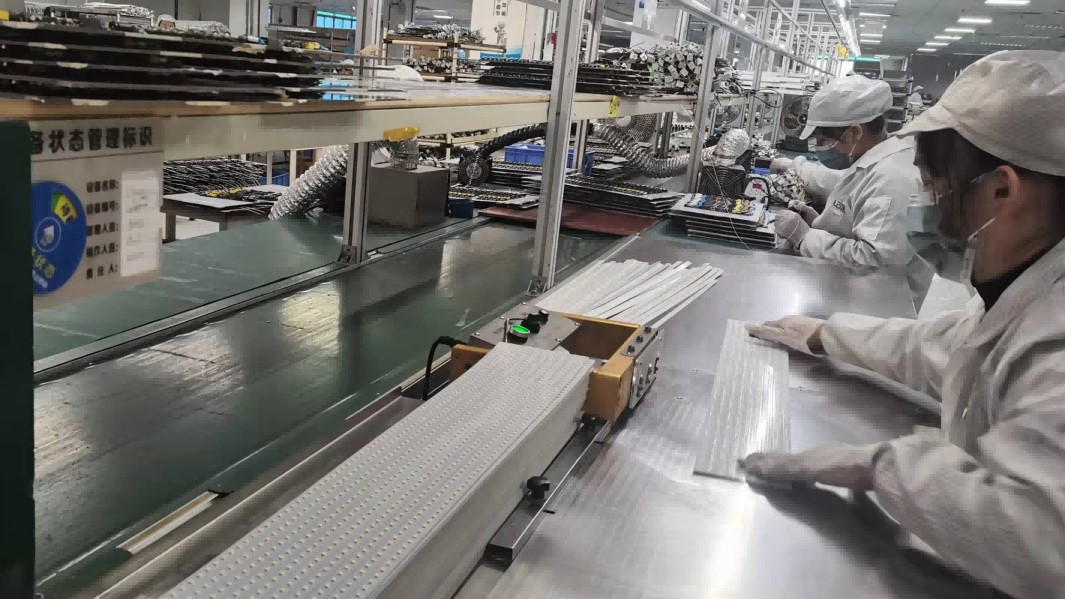
Not every company advertising itself as a "factory" actually manufactures the products.
Some companies focus mainly on exporting, while production is outsourced to different factories. This is not automatically a bad business model, but it can make quality control, customization, troubleshooting, and after-sales support more complicated.
How to verify a real manufacturer
Ask the supplier for:
Factory address
Factory photos and videos
Production line photos
SMT or PCB assembly capability
Assembly facilities
Aging-test area
Photometric testing equipment
Quality-control procedures
Warehouse photos
Product development facilities
Factory audit information
Business license information
For larger projects, a factory audit or third-party inspection is strongly recommended.
Don't judge factory size by square meters alone
A large factory does not automatically mean better products.
Instead, evaluate:
Production capability + engineering capability + QC system + testing capability + supply-chain stability.
A smaller specialized manufacturer with strong engineering and quality control may be a better partner than a large factory that produces hundreds of unrelated products.
2. Check Whether the Manufacturer Specializes in Outdoor Lighting
Outdoor lighting is technically different from ordinary indoor lighting.
Outdoor fixtures must deal with:
Rain
Dust
Humidity
UV exposure
Temperature changes
Wind
Corrosion
Electrical surges
Mechanical vibration
Long operating hours
Therefore, a manufacturer specializing in outdoor lighting should understand these environmental challenges.
Look at the supplier's product portfolio.
A serious outdoor lighting manufacturer may specialize in products such as:
LED road lights
LED flood lights
LED area lights
LED stadium lights
LED high mast lights
LED tunnel lights
LED garden lights
Solar street lights
Parking lot lights
Industrial outdoor lighting
A company with a focused outdoor-lighting portfolio is often easier for B2B buyers to evaluate than a general lighting trader offering thousands of unrelated products.
3. Evaluate the LED Chips, Driver and Main Components
One of the biggest mistakes buyers make is evaluating only the lamp housing.
The housing may look excellent, while the internal components determine much of the product's actual performance.
Ask the manufacturer about:
LED chips
Request information about:
LED brand
LED model
LED efficacy
Color temperature
CRI
Junction temperature
LM-80 information where applicable
Expected lumen maintenance
LED driver
The driver is particularly important for outdoor lighting.
Ask about:
Driver manufacturer
Input voltage
Output current
Power factor
Efficiency
Surge protection
Operating temperature
Dimming options
Warranty
Driver replacement availability
Surge protection
Outdoor lighting is exposed to electrical disturbances, especially street and roadway installations.
For project applications, ask the manufacturer to clearly specify the surge protection design rather than simply writing "surge protected" on the datasheet.
4. Don't Choose Outdoor Lights by Wattage Alone
A common B2B purchasing mistake is comparing products only by watts and unit price.
For example:
100W + $X
does not tell you whether one fixture is better than another.
Instead, compare:
Lumens
Lumens per watt
Beam angle
Light distribution
CRI
CCT
Power factor
Driver efficiency
Operating temperature
Lifetime
IP rating
IK rating
Surge protection
Warranty
A 100W fixture with better optical efficiency may deliver significantly better useful illumination than another 100W fixture.
For road lighting, the light distribution can be even more important than raw lumen output.
5. Ask for IES or LDT Photometric Files
For professional lighting projects, photometric data is extremely valuable.
A reliable manufacturer should be able to provide appropriate photometric files such as:
IES
LDT
These files can be used with lighting-design software to evaluate:
Illuminance
Uniformity
Beam distribution
Mounting height
Spacing
Light levels
Pole arrangement
Energy consumption
For distributors and contractors, requesting photometric files before placing a large order can help prevent expensive design mistakes.
Photo suggestion: Show an integrating sphere or photometric laboratory to demonstrate that the manufacturer verifies actual optical performance.
6. Verify IP and IK Ratings Carefully
Outdoor lighting needs protection against environmental and mechanical conditions.
IP rating
IP ratings relate to protection against ingress of solids and water.
For outdoor lighting, buyers commonly encounter specifications such as:
IP65
IP66
IP67
However, the number printed on a catalog is not enough.
Ask:
Is the IP rating supported by a test report for this exact product?
Also check whether modifications to the housing, cable gland, connector, driver compartment, or glass cover could affect the tested configuration.
IK rating
IK ratings describe resistance to mechanical impact.
This can be important for:
Public areas
Roads
Parking lots
Sports facilities
Industrial sites
Vandal-prone locations
The required IP and IK level should always be selected according to the actual project environment.
7. Check Certifications for Your Target Market
Certification requirements depend on where you will sell or install the lighting products.
For example, requirements can differ between:
Europe
North America
Australia
Middle East
Southeast Asia
Latin America
Africa
Potential certifications and test documentation may include:
RoHS
CB
ENEC
UL
ETL
SAA
FCC
IEC-related test reports
LM-79
LM-80
TM-21
The important point is:
Do not simply ask, "Do you have CE?"
Instead ask:
"Does this exact model have the certification and test documentation required for my target market?"
Certification should match the relevant product, model, configuration, and market.
8. Investigate the Manufacturer's Quality-Control Process
A reliable manufacturer should have quality control throughout the production process—not only at the final inspection stage.
A useful QC process may include:
IQC — Incoming Quality Control
Components are checked before entering production.
Examples:
LED modules
Drivers
PCBs
Aluminum housings
Lenses
Glass
Screws
Sealing materials
IPQC — In-Process Quality Control
Production is checked during assembly.
Examples:
Screw torque
Wiring
Driver installation
Thermal interface
Waterproof sealing
Assembly consistency
FQC/OQC — Final/Outgoing Quality Control
Finished products are inspected before shipment.
Examples:
Electrical safety
Power consumption
Light output
Appearance
Waterproofing
Packaging
Product labeling
The best supplier is not necessarily the one that says "100% quality inspection."
Ask what exactly is inspected, how it is measured, and whether records are maintained.
9. Ask About Outdoor Lighting Testing
Testing capability is one of the strongest indicators of manufacturing maturity.
Depending on the product, useful tests may include:
Aging test
Thermal test
Waterproof test
Dust test
Salt spray test
Surge test
Electrical safety test
Photometric test
Integrating sphere test
IES test
Vibration test
UV test
Humidity test
Endurance test
Dielectric strength test
Not every product requires every test, so the testing plan should match the application.
For example, coastal projects may require greater attention to corrosion resistance, while roadway projects may require stronger consideration of vibration, surge protection, thermal management, and photometric performance.
10. Examine Thermal Management
LED lighting generates heat, and poor thermal management can reduce long-term performance.
When evaluating an outdoor LED manufacturer, examine:
Heat-sink structure
PCB-to-housing thermal interface
Driver temperature
LED junction temperature
Ventilation strategy
Thermal simulation or testing
Operating-temperature range
A good-looking housing is not necessarily a good heat sink.
Ask the manufacturer:
"What is the LED junction-temperature or thermal-management strategy under the rated operating conditions?"
For high-power outdoor lighting, this question can reveal the difference between a product designed for long-term use and one designed primarily around low purchase price.
11. Check OEM and ODM Capability
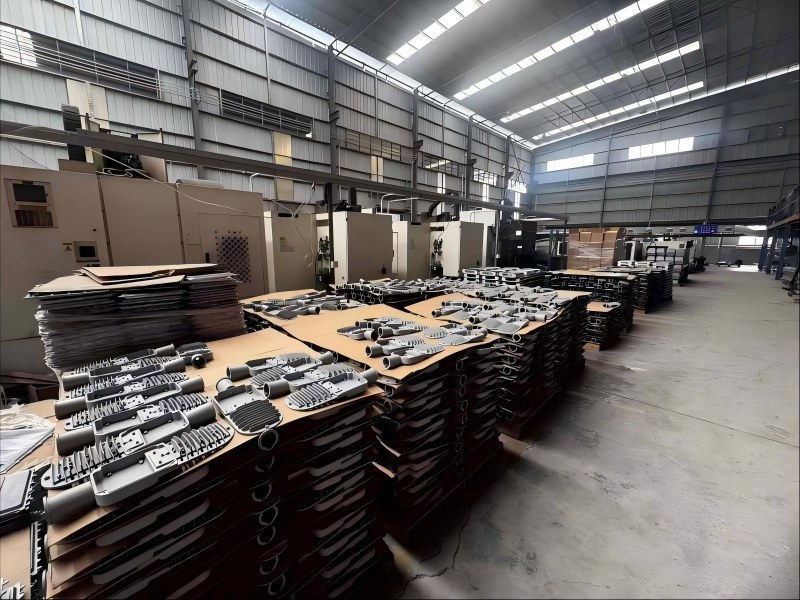
For B2B distributors and private-label buyers, OEM/ODM capability can be a major advantage.
OEM
The manufacturer produces the product according to your specifications and branding requirements.
Possible customization includes:
Logo
Packaging
Label
Color
CCT
Wattage
Driver
Cable
Connector
Product configuration
ODM
The manufacturer can also participate in product development and design.
ODM may include:
Housing design
Optical design
PCB design
Driver configuration
Mechanical modification
Prototype development
New product development
For long-term B2B business, a manufacturer with in-house engineering resources can be much more valuable than a supplier that only sells standard catalog products.
12. Ask for Samples Before Bulk Orders
Never rely entirely on catalog specifications.
For a serious purchase, request samples and test them.
Your sample evaluation should cover:
Appearance
Surface finish
Powder coating
Housing quality
Glass or lens quality
Screws and connectors
Cable quality
Electrical performance
Actual wattage
Input voltage
Power factor
Current
Driver performance
Optical performance
Actual lumen output
CCT
CRI
Beam angle
Light distribution
Mechanical performance
Mounting bracket
Adjustment mechanism
Screw quality
Structural strength
Environmental performance
Waterproofing
Sealing
Corrosion resistance
Temperature performance
A sample is not only for checking whether the product "looks good."
It is an opportunity to determine whether the supplier's actual product matches the quotation and datasheet.
13. Compare Total Cost, Not Just Factory Price
The cheapest quotation is rarely the cheapest total solution.
Consider the Total Cost of Ownership (TCO).
Your calculation should include:
Product price + tooling + certification + packaging + freight + import costs + installation + maintenance + replacement + warranty risk
For example, a slightly more expensive fixture may provide:
Better efficiency
Longer component life
Better waterproofing
Lower failure rate
Better optical performance
Longer warranty
Easier maintenance
That product may ultimately cost less over the project lifecycle.
For distributors, consistency is also a cost factor. If a supplier sends different components in every production batch, your after-sales and inventory costs can increase significantly.
14. Evaluate MOQ, Lead Time and Production Capacity
For B2B procurement, production capacity should match your business model.
Ask:
What is the MOQ?
What is the sample lead time?
What is the normal bulk lead time?
What is the monthly production capacity?
How many production lines are available?
Which components are kept in stock?
What happens during peak season?
How are urgent orders handled?
Do not accept a general statement such as:
"Fast delivery."
Instead, request a specific production schedule.
For large projects, ask the supplier to confirm whether production can be completed according to your required shipment schedule.
15. Check Packaging and Shipping Protection
Outdoor lighting products often contain:
Aluminum housings
Glass
Lenses
Drivers
Brackets
Electrical components
Poor packaging can turn a high-quality product into a damaged shipment.
Check:
Individual packaging
Foam protection
Carton strength
Palletization
Moisture protection
Container loading
Drop protection
Product labeling
For export orders, ask the supplier to provide actual packaging photos before mass production.
Photo suggestion: Show actual export packaging and warehouse operations to help B2B buyers evaluate shipping readiness.
16. Ask About Warranty and After-Sales Support
A reliable supplier should be able to explain its warranty policy clearly.
Don't only ask:
"How many years warranty?"
Also ask:
What does the warranty cover?
What is excluded?
How are defective products handled?
Are replacement drivers available?
Are spare parts available?
Who pays shipping for warranty claims?
How quickly will replacement parts be provided?
Is there a technical support team?
Can the manufacturer provide installation guidance?
For distributors, replacement components are especially important.
A supplier that can provide drivers, lenses, brackets, surge protectors, or other components years after the original purchase can be a much stronger long-term partner.
17. Check Communication and Engineering Support
Communication is often underestimated during supplier selection.
A reliable B2B manufacturer should be able to answer technical questions clearly.
Pay attention to whether the supplier can provide:
Complete datasheets
Technical drawings
Installation instructions
Photometric files
Certification documents
Test reports
BOM information when appropriate
Sample specifications
Packaging specifications
Production schedules
More importantly, observe how they answer difficult questions.
If the supplier avoids technical questions or repeatedly gives vague answers, this can be a warning sign.
18. Request References and Project Experience
Ask whether the manufacturer has experience with projects similar to yours.
For example:
For street-lighting projects
Ask about:
Road type
Pole height
Lighting layout
Climate
Control system
Photometric design
For industrial projects
Ask about:
Operating hours
Ambient temperature
Dust
Humidity
Mounting height
For coastal projects
Ask about:
Salt exposure
Corrosion protection
Material selection
Salt-spray testing
A manufacturer with relevant project experience can often identify potential problems before production begins.
19. Red Flags When Choosing a China Outdoor Lighting Supplier
B2B buyers should be cautious if a supplier:
1. Offers an unusually low price
If the price is dramatically lower than comparable suppliers, investigate what has been removed from the specification.
2. Cannot provide detailed technical documents
A serious manufacturer should understand its own products.
3. Uses the same certification for multiple unrelated models
Always check whether the certificate applies to the exact product.
4. Refuses factory verification
A manufacturer that cannot provide reasonable evidence of production capability deserves additional scrutiny.
5. Changes specifications without written confirmation
Component substitutions should never happen silently.
6. Promises everything
"IP68 + IK10 + 200 lm/W + 100,000 hours + 10-year warranty" may sound attractive, but each claim should be technically supported.
7. Focuses only on price
A professional supplier should discuss performance, specifications, project requirements, testing, and quality—not only unit cost.
20. A Practical Supplier Evaluation Scorecard
For B2B procurement, you can score potential manufacturers using a simple system.
| Evaluation Category | Suggested Weight |
|---|---|
| Manufacturing capability | 15% |
| Product quality | 15% |
| Testing & QC | 15% |
| Certifications | 10% |
| Engineering/R&D | 10% |
| Outdoor product specialization | 10% |
| Price competitiveness | 10% |
| Delivery capability | 5% |
| OEM/ODM capability | 5% |
| After-sales service | 5% |
This approach prevents one attractive quotation from dominating the entire decision.
A supplier with the lowest price but poor quality control should not automatically win the order.
21. Questions to Ask a China Outdoor Lighting Manufacturer
Before placing a bulk order, send the supplier a structured questionnaire.
Factory
Are you the actual manufacturer?
Where is your production facility?
What outdoor lighting products do you manufacture?
How many production lines do you have?
Do you have an engineering/R&D team?
Product
Which LED chips are used?
Which driver is used?
What is the actual system efficacy?
What is the operating temperature range?
What are the IP and IK ratings?
What surge protection is provided?
What photometric files are available?
Testing
What tests are performed before shipment?
Do you have an integrating sphere?
Do you have photometric testing equipment?
Can you provide test reports?
Do you perform aging tests?
Certification
Which certifications are available?
Do they apply to the exact model?
Can the certification documentation be provided for review?
Production
What is the sample lead time?
What is the bulk lead time?
What is the MOQ?
What is the monthly production capacity?
Commercial
What is the warranty?
How are warranty claims handled?
Are spare parts available?
Can you provide OEM/ODM services?
Can you support private labeling?
Can you provide references from similar projects?
A supplier that can answer these questions clearly is much easier to evaluate.
Conclusion: How to Find a Reliable Outdoor Lighting Manufacturer in China
Choosing a reliable outdoor lighting manufacturer in China should be treated as a supplier qualification process, not simply a price comparison.
The strongest B2B suppliers usually demonstrate several capabilities at the same time:
Real manufacturing capability + stable components + strong QC + appropriate testing + valid certifications + engineering support + reliable delivery + long-term after-sales service.
Before making a large purchase, start with a supplier shortlist, verify the factory, request technical documentation, test samples, check certifications, compare total costs, and clearly define product specifications in the purchase agreement.
For distributors, contractors, and procurement managers, the goal should not be to find the cheapest outdoor lighting factory in China.
The goal is to find a manufacturer that can deliver consistent quality, predictable performance, competitive total cost, and reliable supply for your next order—and the order after that.
Final B2B Buyer Checklist
Verify the company is a real manufacturer or understand its manufacturing model.
Check outdoor lighting specialization.
Verify LED chips and drivers.
Compare real lumen output and efficacy.
Request IES/LDT photometric files.
Verify IP and IK ratings.
Check market-specific certifications.
Review QC and testing procedures.
Evaluate thermal management.
Request samples before bulk orders.
Compare total cost instead of unit price alone.
Confirm MOQ and production lead time.
Check export packaging.
Review warranty and spare-parts support.
Evaluate OEM/ODM capabilities.
Ask for relevant project experience.
Author introduction

Author
Hey Guys ,My name is Royce O'young, the sales manager of Oleder Lighting. I have been in the LED lights industry for more than 16 years,have some experience in lighting design,
track light system configuration, and bidding technology support,and architecture inner decorating lighting advice.
If you are looking for assistance from industry professionals to help guiding you in your lighting process,feel free to reach out to our talented Oleder team .
Email: r.oyoung@oleder-lighting.com | Wechat/WhatsApp: +86159 2057 0517.
Recommended Products
CATEGORIES
CONTACT US
Contact: Royce O'young
Phone: 15920570517
Tel: 0086-20-37716973
Email: r.oyoung@oleder-lighting.com
Add: Room 335,#1 Xianke 1st Rd, Honglitronic Group,Huadu ,510890, Guangzhou,P.R.C.
 Send Email
 Royce O'young
 Sales
Sales WhatsApp