Blog
Solar Street Lights from China: 10 Things Importers Must Check Before Bulk Ordering

Introduction: Why Importers Choose Chinese SOLAR STREET LIGHT Manufacturers
Solar street lighting has become an increasingly popular solution for road construction, residential communities, parking lots, industrial parks, rural electrification, and municipal infrastructure projects.
For international importers, China is one of the major sourcing destinations for solar street lights. Chinese manufacturers offer a wide range of products, including all-in-one solar street lights, split-type solar street lights, integrated solar lighting systems, and customized solar street lighting solutions.
However, finding a supplier with competitive prices is only the first step.
A low quotation does not necessarily mean a good investment. Differences in battery capacity, solar panel efficiency, LED performance, controller quality, and product design can significantly affect the actual performance of a solar street light.
For distributors, contractors, and project procurement managers, choosing the wrong manufacturer may lead to product failures, customer complaints, delayed projects, and additional maintenance costs.
So, what should importers check before placing a bulk order?
Here are 10 essential points to help you make a more informed purchasing decision.
1. Check the Manufacturer's Real Factory Capability
The first step is to distinguish between a genuine manufacturer and a trading company.
China has many lighting suppliers, but their production capabilities are different.
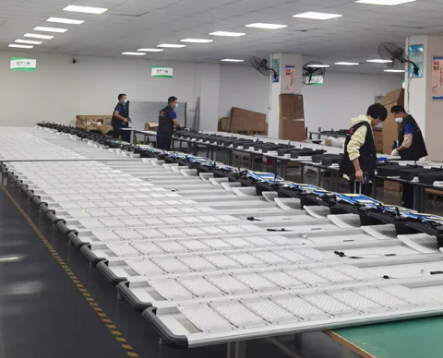
Some companies operate their own factories with engineering, tooling, assembly, and testing departments. Others purchase finished products from different factories and resell them under their own brands.
Both business models can serve buyers, but importers should understand who is actually responsible for product quality.
What should you check?
Does the supplier have its own production facility?
Does it have an independent R&D or engineering team?
Can it manufacture aluminum housings and related components?
Does it have aging test equipment and quality inspection procedures?
Can it provide factory videos or arrange an online factory tour?
Can it support OEM and ODM projects?
Buyer's Tip:
Ask the supplier to show you its production process, from component inspection to final assembly and packaging.
A reliable manufacturer should be able to explain its production process clearly.
2. Verify the Actual Battery Capacity and Battery Quality
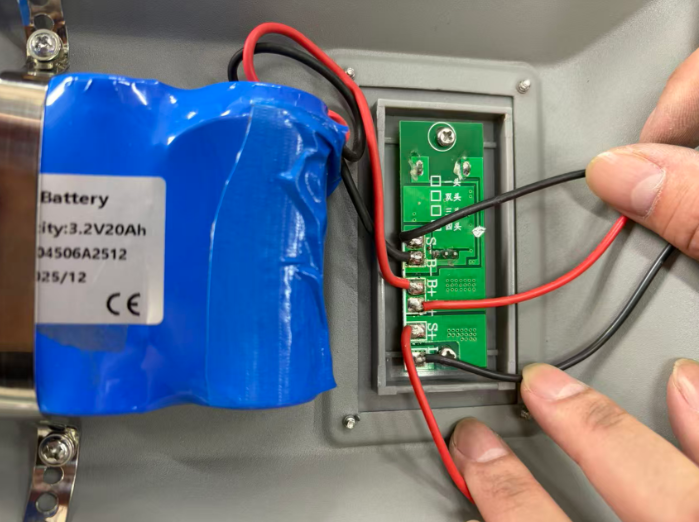
The battery is one of the most important components of a solar street light.
It stores electrical energy generated by the solar panel during the daytime and supplies power to the LED light at night.
However, battery specifications are sometimes exaggerated in low-cost solar street lighting products.
For example, two suppliers may offer solar street lights with the same advertised wattage, but their actual battery capacities may be completely different.
Important battery specifications to check:
| Item | What Importers Should Check |
|---|---|
| Battery type | LiFePO4 or other lithium battery |
| Battery capacity | Actual Wh or Ah |
| Nominal voltage | Battery operating voltage |
| Cycle life | Manufacturer's tested cycle-life data |
| Protection | Overcharge and over-discharge protection |
| Temperature range | Suitable for local climate |
| Warranty | Clearly defined warranty terms |
For outdoor solar lighting projects, LiFePO4 batteries are commonly used because of their thermal stability and long cycle-life potential.
However, battery performance also depends on cell quality, operating temperature, charging conditions, and battery management.
Buyer's Tip:
Do not compare batteries using Ah alone.
For a meaningful comparison, calculate energy capacity:
Battery Energy (Wh) = Voltage (V) × Capacity (Ah)
Ask the manufacturer to provide battery specifications and supporting test reports.
3. Evaluate Solar Panel Efficiency and Power Output
The solar panel determines how much energy can be collected during daylight hours.
An undersized solar panel may not generate sufficient electricity to fully recharge the battery, particularly in regions with cloudy weather or shorter daylight hours.
Importers should pay attention to actual panel power rather than relying only on product marketing descriptions.
Key specifications include:
Solar panel technology: Monocrystalline or other technologies.
Rated power: Actual maximum power output in watts.
Conversion efficiency.
Operating voltage and current.
Panel dimensions.
Weather resistance.
Expected performance under local sunlight conditions.
For example, a solar street light designed for a sunny Middle Eastern region may require a different solar panel and battery configuration from one designed for Northern Europe.
The system should be designed according to local solar radiation, operating hours, and required autonomy days.
Buyer's Tip:
Ask the manufacturer for the solar panel datasheet and system sizing calculations.
Do not select a solar street light based only on the advertised LED wattage.
4. Confirm the Real LED Power and Lumen Output
Another common purchasing mistake is focusing only on the advertised wattage.
Some low-cost solar street lights use exaggerated wattage claims that do not reflect the actual LED power consumption.
For example, a product advertised as a 200W solar street light may have a much lower actual LED input power.
This can create problems when the products are installed in commercial roads or municipal projects.
What should importers request?
| Specification | Why It Matters |
|---|---|
| Actual LED input power | Confirms real power consumption |
| Luminous flux | Indicates total light output |
| Luminous efficacy | Shows energy efficiency |
| Color temperature | Determines lighting appearance |
| CRI | Indicates color rendering quality |
| Beam angle | Determines light distribution |
| LED chip brand | Helps evaluate component quality |
Importers should also request an LM-79 photometric test report where applicable.
For road lighting projects, luminous flux alone is not enough.
A professional manufacturer should be able to provide IES files and lighting simulation support to evaluate road illuminance, uniformity, and pole spacing.
Buyer's Tip:
For municipal projects and engineering tenders, request a lighting simulation based on actual road dimensions, pole height, and installation spacing.
5. Check the Solar Controller and Intelligent Dimming Functions
The solar charge controller manages the energy flow between the solar panel, battery, and LED lighting system.
A poor-quality controller can reduce battery life and cause unstable lighting performance.
For bulk purchasing, importers should evaluate the controller's functionality and protection mechanisms.
Important features include:
Overcharge protection.
Over-discharge protection.
Short-circuit protection.
Reverse-polarity protection.
Automatic day/night detection.
Intelligent power management.
Programmable lighting schedules.
Motion sensor dimming, if required.
For example, a solar street light can operate at reduced brightness during low-traffic hours and increase brightness when a vehicle or pedestrian is detected.
This intelligent dimming function helps reduce energy consumption and extend the lighting duration.
Buyer's Tip:
Ask whether the controller parameters can be customized for different project requirements.
A manufacturer with engineering capabilities should be able to provide suitable controller configurations.
6. Inspect Housing Material and Waterproof Performance
Solar street lights operate outdoors throughout the year.
They must withstand rain, dust, UV exposure, high temperatures, and other environmental conditions.
The housing design directly affects heat dissipation, mechanical strength, and product lifetime.
What should you check?
| Component | Recommended Inspection |
|---|---|
| Lamp housing | Aluminum alloy or suitable engineering material |
| Surface treatment | Outdoor corrosion-resistant coating |
| Waterproof rating | Appropriate IP rating, such as IP65 or IP66 |
| Impact resistance | IK rating where required |
| Fasteners | Corrosion-resistant materials |
| Sealing | Gaskets and waterproof connections |
| Heat dissipation | Effective thermal management |
For example, IP66-rated products provide a higher level of protection against dust and powerful water jets than IP65-rated products.
However, importers should verify the rating through appropriate test reports rather than relying only on labels.
For coastal areas, additional attention should be given to corrosion resistance.
Buyer's Tip:
Request IP test reports and inspect the housing structure, sealing design, and cable connections before approving mass production.
7. Verify Certifications and Export Compliance
Different countries and markets have different product certification and import requirements.
Before placing a bulk order, importers should confirm whether the manufacturer can provide the necessary documents.
Common documents and certifications may include:
| Document | Purpose |
|---|---|
| CE | Relevant European conformity requirements |
| RoHS | Restriction of hazardous substances |
| EMC test report | Electromagnetic compatibility |
| IEC test reports | Applicable electrical and product safety testing |
| UN38.3 | Lithium battery transportation testing |
| MSDS | Battery material safety information |
| IEC 62133 | Applicable portable battery safety requirements, where relevant |
Not every certificate applies to every solar street light.
For example, the applicable battery and electrical safety requirements depend on the product design and destination market.
Importers should also check local customs regulations, labeling requirements, and project tender specifications.
Buyer's Tip:
Do not accept a certificate simply because the supplier sends a PDF.
Check the product model, applicant or manufacturer, issuing laboratory, validity, and applicable standards.
8. Evaluate Factory Quality Control Before Mass Production
A sample that performs well does not automatically guarantee consistent quality across thousands of units.
Bulk orders require systematic quality control.
A professional solar street light manufacturer should have documented inspection procedures covering incoming components, production processes, and finished products.
Recommended quality inspection stages:
Stage 1: Incoming Material Inspection
LED chips and drivers.
Lithium batteries.
Solar panels.
Aluminum housings.
Electronic controllers.
Stage 2: Production Inspection
Assembly quality.
Electrical connections.
Waterproof sealing.
Mechanical installation.
Component compatibility.
Stage 3: Finished Product Testing
Lighting function test.
Charging and discharging test.
Aging test.
Waterproof testing according to the agreed inspection plan.
Packaging inspection.
Stage 4: Pre-Shipment Inspection
For larger orders, consider hiring a third-party inspection company to conduct random inspections before shipment.
Buyer's Tip:
Agree on an acceptable quality standard, inspection criteria, and defect-handling procedure before signing the purchase contract.

Quality Engineer Check and test product reliability for Solar street lights
9. Compare Total Purchasing Costs Instead of Only Unit Prices
Price is important for importers, but the lowest quotation is not always the most profitable choice.
A solar street light with a cheaper battery or smaller solar panel may have a lower initial cost but create more maintenance problems later.
When comparing Chinese solar street light suppliers, consider the total landed cost.
A practical cost comparison should include:
| Cost Item | What to Consider |
|---|---|
| Product price | Actual configuration and specifications |
| Tooling cost | Custom housing or mold development |
| Packaging | Export carton and protective materials |
| Shipping | Sea freight and destination charges |
| Certification | Required testing and documentation |
| Import duty | Local customs taxes and tariffs |
| Warranty | Replacement parts and service costs |
| Installation | Accessories and installation requirements |
For distributors, the final selling price and profit margin are more important than the initial factory quotation alone.
For engineering contractors, reliability and maintenance costs can significantly affect project profitability.
Buyer's Tip:
Request quotations from at least three manufacturers using exactly the same technical specifications.
This makes price comparisons more meaningful.
10. Confirm OEM/ODM Capability, Delivery Time, and After-Sales Support
For importers building their own brands, OEM and ODM services can provide significant commercial advantages.
Some Chinese solar street light manufacturers offer standard products, while others can provide customized solutions.
Typical OEM/ODM services include:
Customized lamp housing design.
Private logo and brand labeling.
Customized packaging.
Battery and solar panel configuration.
Customized LED power.
Intelligent controller programming.
Product structure modification.
Project-specific lighting solutions.
Importers should also clarify production lead times.
For example, a supplier may promise a short delivery time for standard products but require additional time for customized housings or electronic configurations.
Before signing the order, confirm:
Sample approval procedures.
Mass production lead time.
Production capacity per month.
Warranty period and conditions.
Spare parts availability.
Technical support response time.
Responsibility for defective products.
Buyer's Tip:
A reliable supplier should provide clear written warranty terms and an effective after-sales process.
Do not rely entirely on verbal promises.

Bonus: 7 Questions to Ask Before Ordering Solar Street Lights from China
Before making your final purchasing decision, send these questions to your shortlisted suppliers.
| No. | Questions |
|---|---|
| 1 | Are you a direct solar street light manufacturer or a trading company? |
| 2 | What is the actual LED input power and luminous flux? |
| 3 | What is the battery capacity in Wh, and what battery cells do you use? |
| 4 | What is the solar panel's actual rated power? |
| 5 | Can you provide relevant test reports and certifications? |
| 6 | What quality inspection procedures are performed before shipment? |
| 7 | Can you support OEM/ODM customization and long-term technical service? |
These questions help importers identify suppliers with genuine manufacturing capabilities and reduce purchasing risks.
Conclusion: Choose a Reliable Solar Street Light Manufacturer, Not Just the Cheapest Supplier
Sourcing solar street lights from China offers excellent opportunities for international distributors, wholesalers, contractors, and project procurement companies.
However, successful sourcing requires more than comparing quotations.
Importers should carefully evaluate factory capabilities, battery specifications, solar panel performance, actual LED output, controller quality, waterproof protection, certifications, quality control, and after-sales service.
Most importantly, always evaluate the complete solar lighting system rather than individual components in isolation.
A reliable Chinese manufacturer should be able to provide technical documentation, product customization, consistent production quality, and long-term cooperation.
For importers planning large-volume purchases, investing time in supplier evaluation before placing an order can help prevent expensive problems after shipment.
Looking for a reliable Chinese LED lighting manufacturer?
OLEDER Lighting provides LED outdoor lighting manufacturing solutions, including LED street lights, LED flood lights, solar lighting products, and customized lighting solutions.
Visit the official website to learn more about its manufacturing capabilities and product range:
Frequently Asked Questions (FAQ)
1. Why do importers buy solar street lights from China?
China has an established lighting manufacturing supply chain, offering a wide range of solar street light designs, component configurations, OEM/ODM services, and competitive manufacturing costs.
Importers can source standard products or develop customized solutions for specific markets.
2. How do I find a reliable solar street light manufacturer in China?
Start by checking the manufacturer's factory capabilities, engineering team, product specifications, certifications, quality control procedures, and export experience.
Request samples and arrange a factory audit or third-party inspection before placing a large order.
3. What battery is best for solar street lights?
LiFePO4 batteries are widely used in solar street lighting because of their thermal stability, good cycle-life potential, and suitability for outdoor energy storage applications.
The correct battery capacity depends on the LED power, operating hours, solar panel output, and required autonomy days.
4. How many days can a solar street light operate without sunlight?
This depends on battery capacity, LED power consumption, daily operating hours, and lighting control settings.
For project applications, buyers should specify the required autonomy days and ask the manufacturer to provide system sizing calculations.
5. What certifications should solar street lights have for export?
Commonly requested documents include CE, RoHS, EMC test reports, and applicable battery transportation documentation such as UN38.3.
The exact requirements depend on the destination market and product configuration.
6. Can Chinese manufacturers provide OEM and ODM solar street lights?
Yes. Many manufacturers offer OEM/ODM services, including customized housing, private labeling, packaging, battery configurations, solar panel selection, and controller programming.
However, the available customization depends on the factory's engineering and production capabilities.
7. What is the typical MOQ for solar street lights from China?
MOQ varies according to the manufacturer, product model, customization requirements, and component availability.
Standard products may have relatively flexible order quantities, while customized products may require higher minimum quantities.
Importers should confirm MOQ, sample costs, and production lead times before ordering.
8. Should I order samples before placing a bulk order?
Yes. Sample evaluation is strongly recommended.
Test the actual LED output, battery capacity, solar charging performance, waterproof construction, and overall product quality.
For large municipal or commercial projects, consider conducting independent product testing before mass production approval.
Author introduction

Author
Hey Guys ,My name is Royce O'young, the sales manager of Oleder Lighting. I have been in the LED lights industry for more than 16 years,have some experience in lighting design,
track light system configuration, and bidding technology support,and architecture inner decorating lighting advice.
If you are looking for assistance from industry professionals to help guiding you in your lighting process,feel free to reach out to our talented Oleder team .
Email: r.oyoung@oleder-lighting.com | Wechat/WhatsApp: +86159 2057 0517.
Recommended Products
CATEGORIES
CONTACT US
Contact: Royce O'young
Phone: 15920570517
Tel: 0086-20-37716973
Email: r.oyoung@oleder-lighting.com
Add: Room 335,#1 Xianke 1st Rd, Honglitronic Group,Huadu ,510890, Guangzhou,P.R.C.
 Send Email
 Royce O'young
 Sales
 WhatsApp